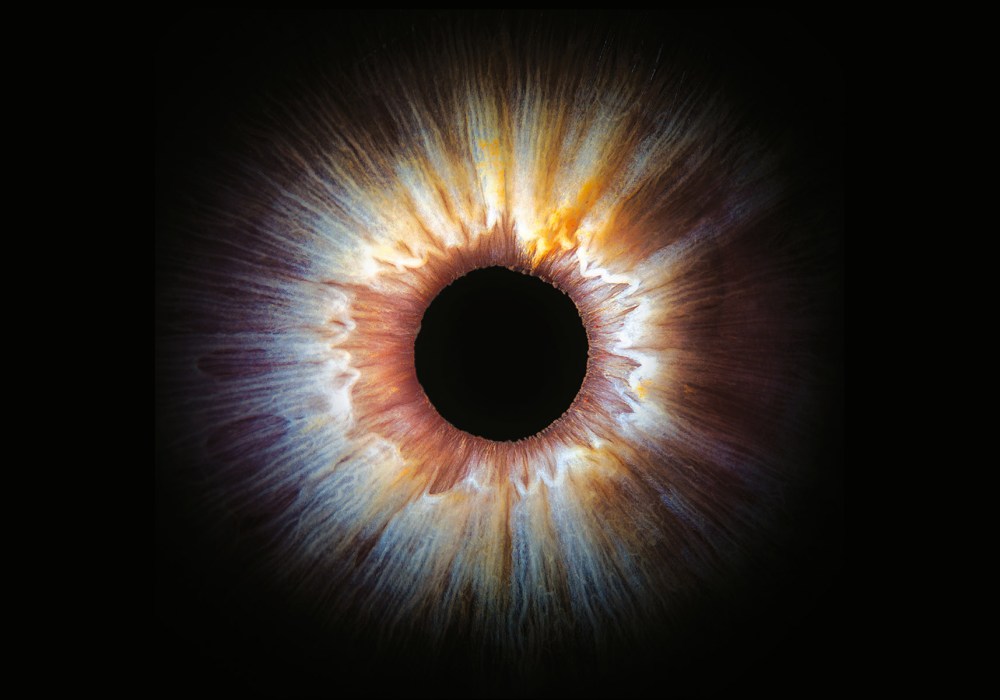
Having broadened my search away from specifically focusing on the presence of cymatic and Farady frequencies in music-visual performance, I have discovered some interesting research papers which deserve attention. Primarily focusing on psychological aspects regarding the enhancement of emotions and immersion in music, they provide an interesting insight into human response when visual performance is present.
Platz and Kopiez (2012), embark on a thorough investigative analysis in their research paper, ‘When The Eye Listens’. Delving into multiple, experimental publications investigating the connection between music and visualisation from 1940 to 2011, they attempt to provide a definitive outcome, which lacks precisely that. Although this is an interesting avenue of research, my personal opinion is that they needed to focus on a specific area, without casting their net so wide. Their resulting metadata suggests a stronger connection to music when visuals are involved, but not definitively to any particular genre of music, or sub-type of concert performance.
In comparison, the work of Baltes and Miu (2014), provides a detailed, practical experiment of human responsiveness to music performance in real-time. Taking a focused approach towards participants responsiveness to a live opera performance, the results showed an enhancement in emotion at key moments during the show. Their research is a good, practical indicator towards increased immersion and fluctuation in mood regarding dual, simultaneous aural and visual stimulation, as opposed to music individually.
So how does this connect with my creative practice and aspirations? Having studied both of these papers, I am reflecting back to my earlier comparison as to how electronic music is presented in clubs and concerts. Inclusive of my previous blog post regarding Awakenings, it is apparent from my research, plus anecdotal evidence that the audience attending music events prefer dual audio-visual stimulation. It is evident from my own experience, that when walking into a venue which is either predominantly dark, or streamlined with effective lighting or visuals, provides greater captivation and the mood of the audience. There have been many times I have entered an event which promises potentially good music, but minimal effort has been spent on decor, visuals and lighting. This results in audience members not being intrigued by mystery and drawn in by what they see, or experiencing an impactful transition in how they feel. It could be agreed, that many in this situation want to see and hear but not be seen or heard while expressing their emotions, whether dancing, watching or both simultaneously.
One could compare this with visiting the cinema to watch a film without the auditorium turning the house lights down. This would undeniably steer focus away from the screen and be distracting for the audience. It may be obvious to some, but not to others that creating a mood suitable to the musical performance and steering focus towards the stage, or screen will increase immersive qualities.
What can I take from these papers? From my perspective, it remains a challenging prospect to include cymatic and Faraday formations in a real-time music to visual display in my future projects. Perhaps one that I will not succeed in making a reality, however I will continue researching its feasibility with the knowledge that its inclusion will potentially only be a powerfully, positive, immersive factor.
References:
Platz, F., Kopiez, R. (2012) ‘When the Eye Listens: A Meta-Analysis of How Audio-Visual Presentation Enhances the Appreciation of Music Performance’. Music Perception; Berkeley 30, 71–83.
Baltes, F.R., Miu, A.C. (2014) ‘Emotions During Live Music Performance: Links With Individual Differences in Empathy, Visual Imagery, and Mood’. Psychomusicology; Washington 24, 58–65.
#Reflection
 Sonic Fluidity