Reflection: Inspiration, creative progression and mentors.

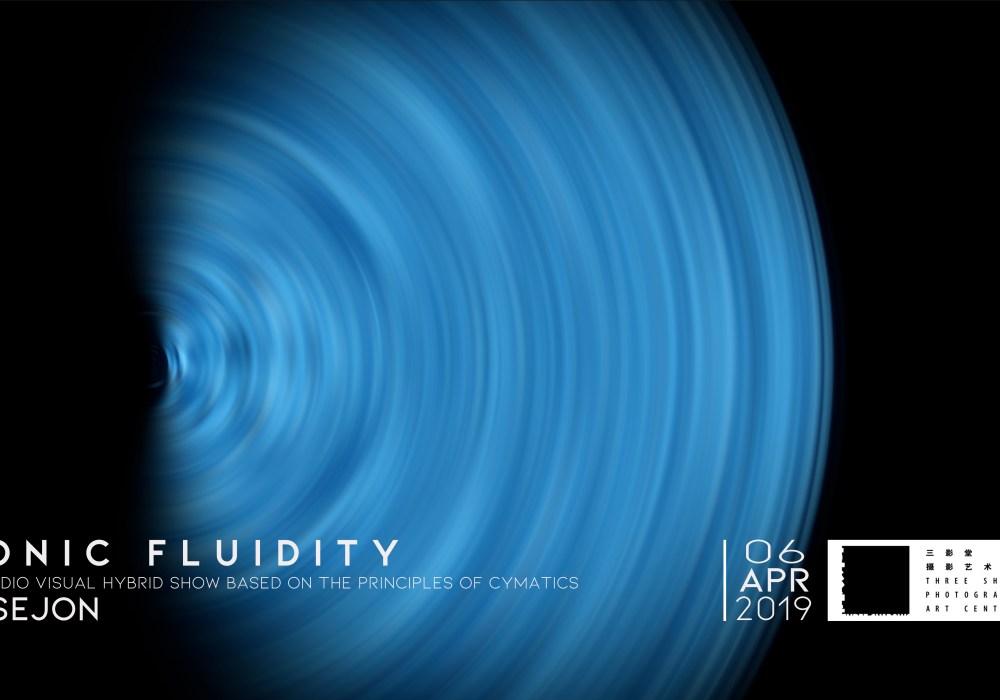
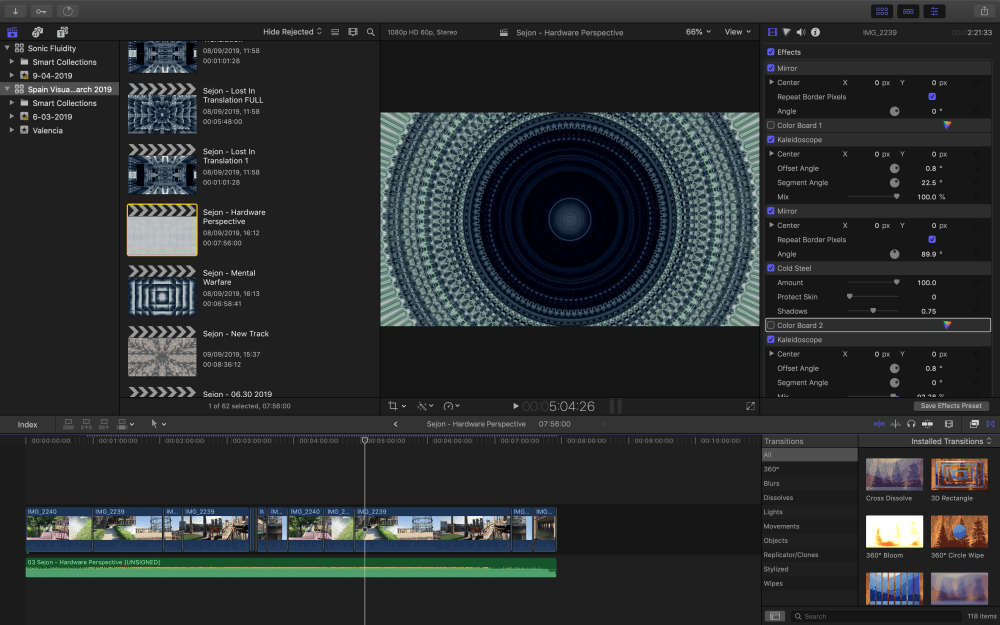
Since writing my last post, while sat in a Cafe in Beijing’s 798 Art District in the sweltering August heat, I have taken steps to thrive on the recent inspiration and proceeded to experiment further. I have asked myself the question, which has been fresh in my mind since doing a prototype performance of Sonic Fluidity earlier this year. Are cymatic patterns interesting, varied and stimulating enough for a performance setting? I would have to say; no, unless they are subject to further, real-time layering and manipulation. I decided to explore my initial fascination of visualisation for music and film some point of view movement in abstract, urban environments. This is a process I would complete to make some twisted visualisations for the Gnosis Records parties in 2016. It requires good knowledge of FCPX, plus a vision of texture, mood and stimulation suitable for the setting.
Screenshot 2019-09-22 at 14.20.04.png

Typical FCPX Session

I ventured out into Beijing and filmed anything that would look good with layered effects. This could be passing buildings from the window of a bus, or walking through tunnels, or riding through streets holding a stabiliser. Even when I am moving through an airport, or flying in a plane I will try to take some footage. Aviation is my other passion and with three live cameras on the A380, I am always keen to observe the ‘underbelly’ feed. This gives an interesting perspective when taxiing, with all the various taxi markings, lights and fluid turns the plane makes while on the ground. If I could access a HD feed from these cameras, it would prove very interesting to utilise such unique source material to manipulate further. Long walkways in airports are also ideal spots to shoot with a stabiliser. When heading to Beijing, I take the option to travel on Lufthansa through Munich, which has some quiet terminal areas with great perspectives. The same could be said for Beijing, however there are always so many people it proves difficult to get a solitary moment to shoot.

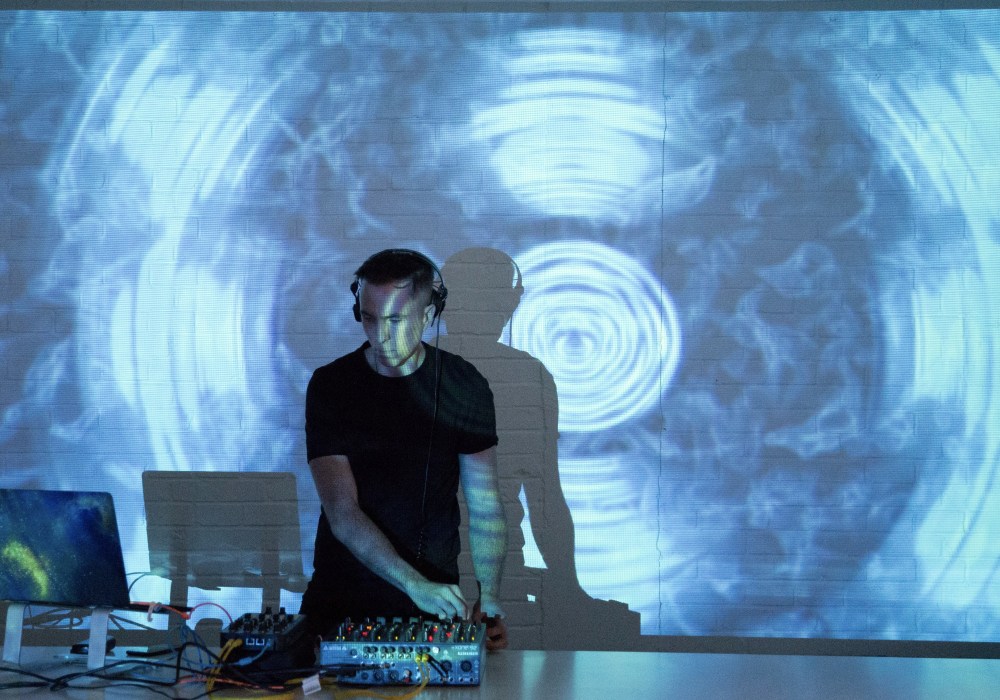
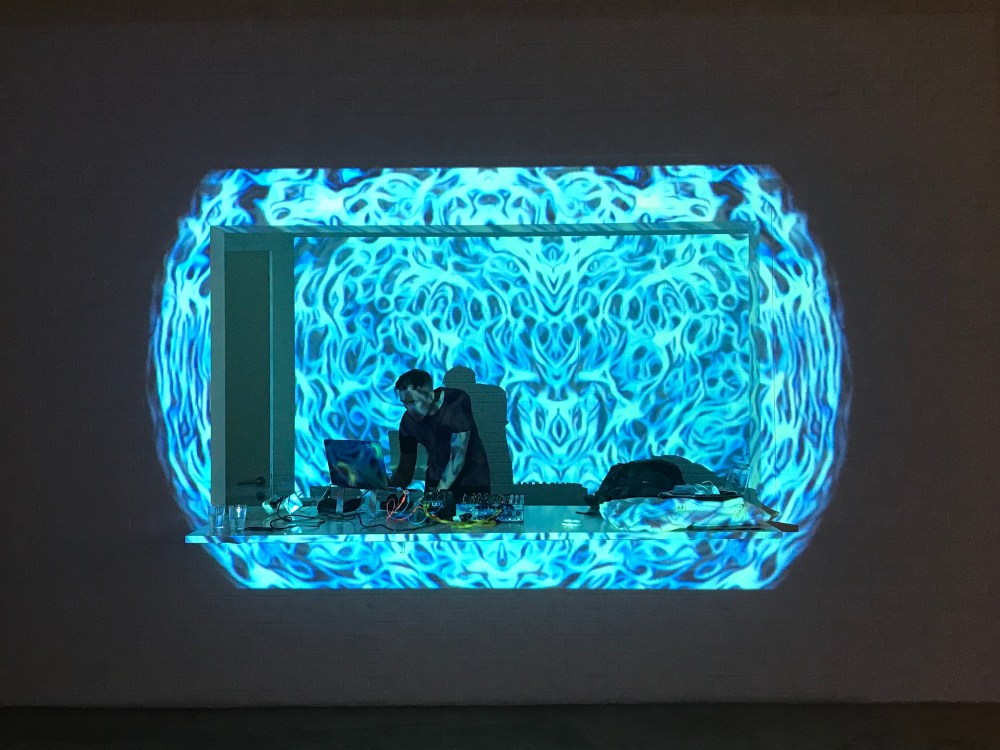
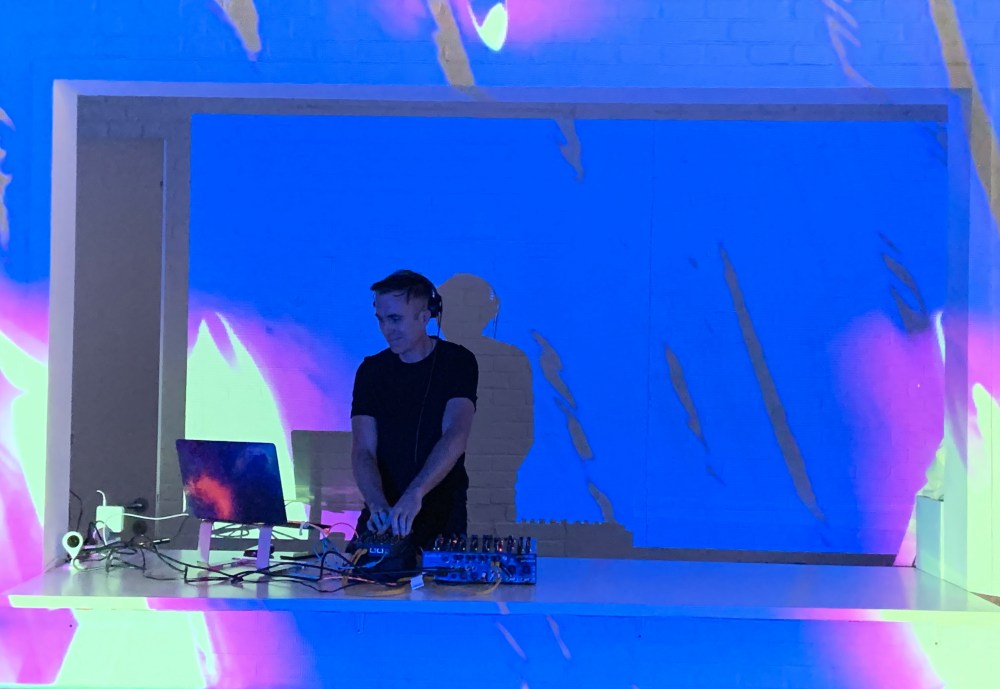
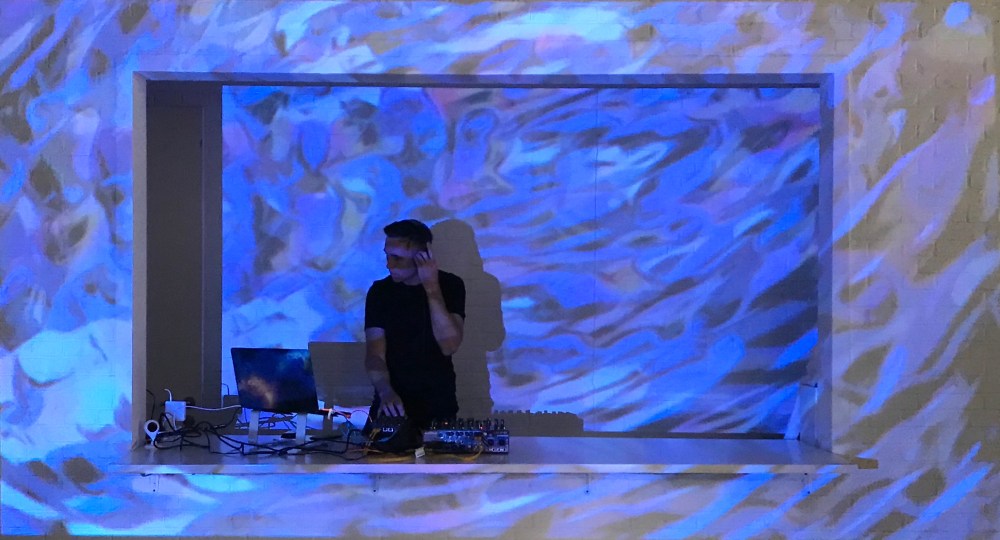
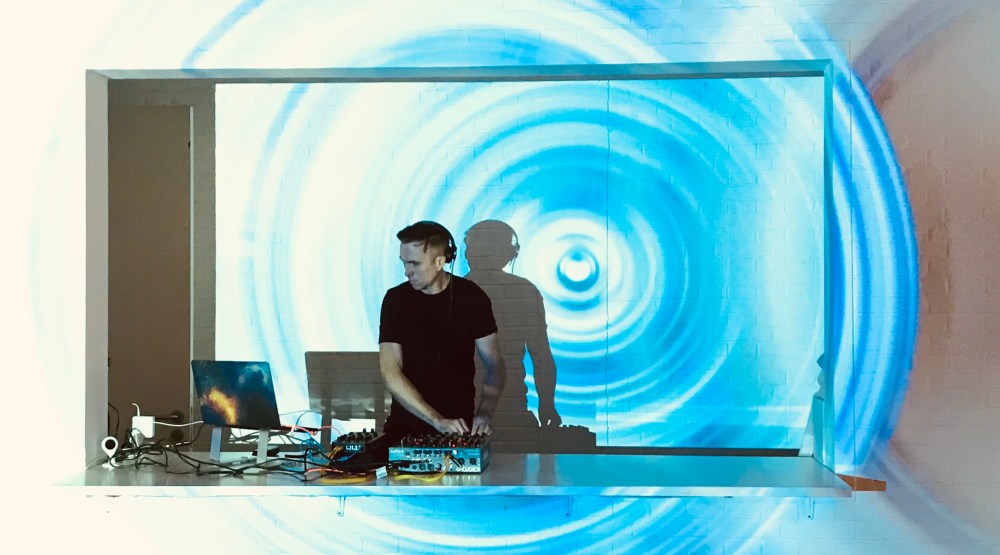
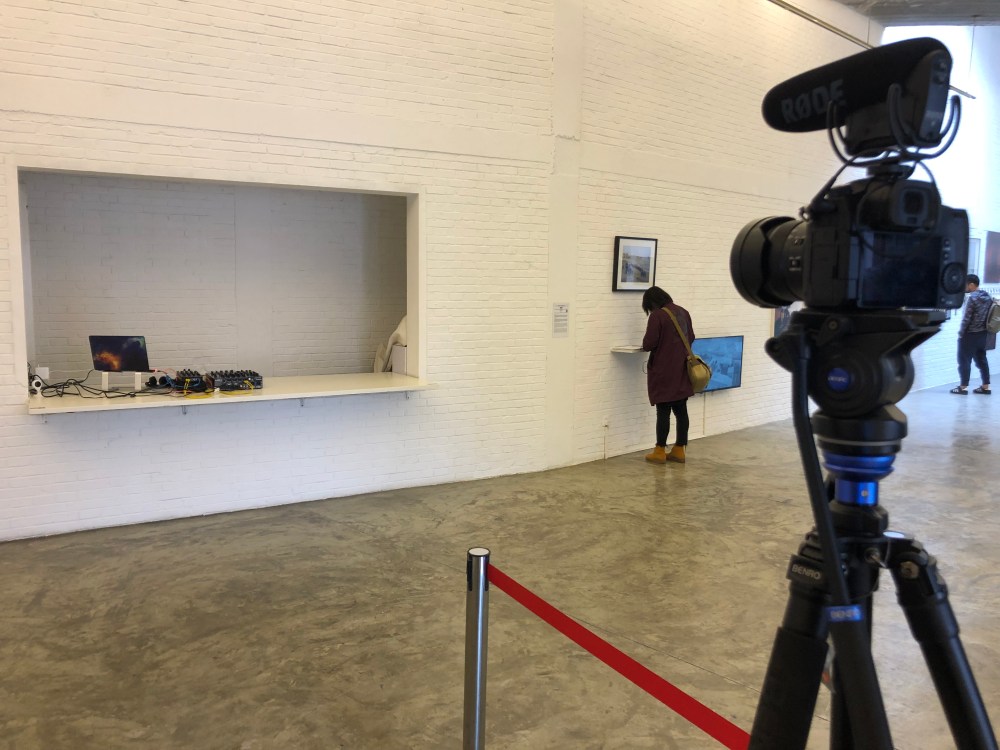
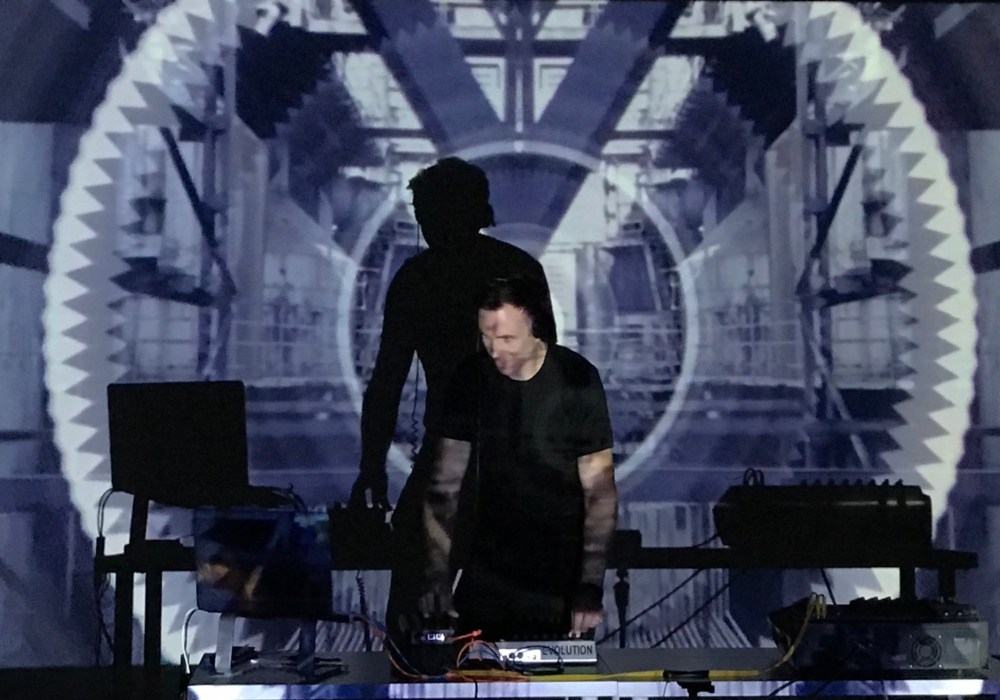
I got some great shots in Munich Airport, but I often question why I like these kind of shots? I guess the symmetry and distance in length of structural architecture appeals to me. Therefore, airports, tunnels, walkways and bridges are great textures to capture. Earlier this year while in Spain, I captured many shots from walking under and across bridges in Valencia. I am often very pleased with the results, not to mention the music I edited the footage to compliment. While in Beijing this time, I successfully completed five videos and had the opportunity to road-test them in a large space with a projector. I knew this was a great opportunity, so I set up my GoPro and had my girlfriend walk around with my DJI stabiliser to capture some shots as I played. I was very lucky to be given some time at Three Shadows Photography Art Centre to film a showcase of my own music and visuals. This incorporated the new, urban style visuals and the cymatic creations I had premiered back in April at the same venue.

The impact was very pleasing from my perspective, the new visuals were very interesting, diverse and stimulating without the need to apply extra effects in the Cross software I was using to perform. It felt invigorating to try this work out in a space and screen size, which was superior to the previous time. There were no people walking in front of the projection and it was filmed with professional prowess, from two different angles – plus I actually recorded my set within Cross. This preserved a HD version of the audio and video exactly as it was performed. It was frustrating in April when the film footage was blurry throughout, with poor audio quality captured. This time was great and if anything will be a good opportunity to demonstrate my ideas and intentions to other people.
IMG_7718.jpg

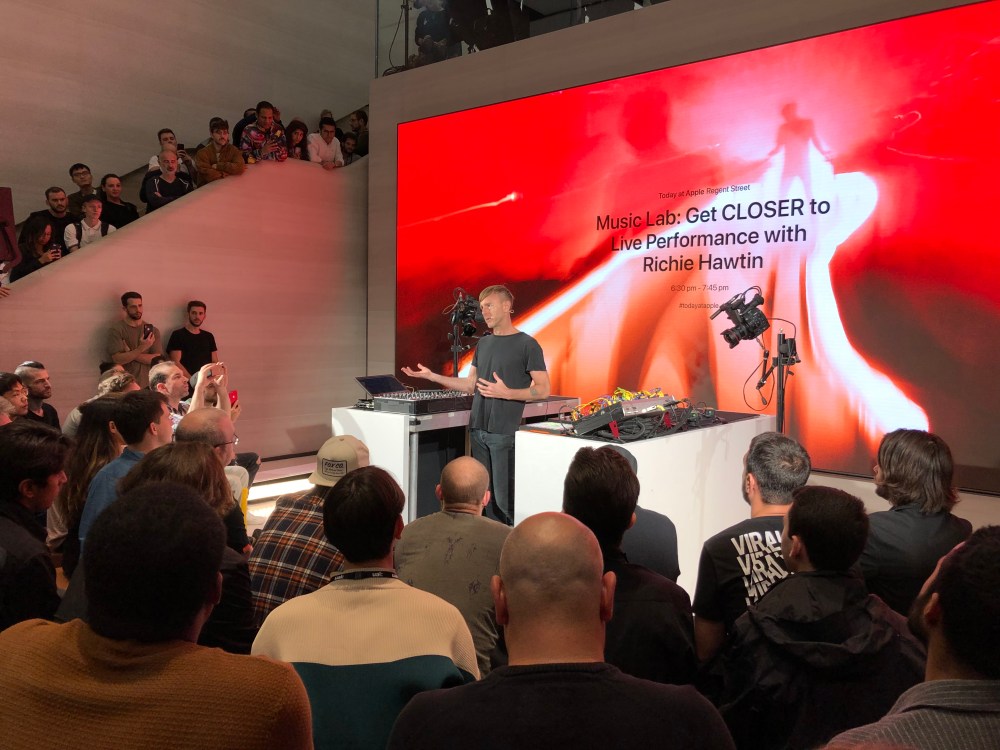
Richie Hawtin: Get CLOSER, Apple Store, London. 16 Sept 2019

Earlier this week, I attended a lecture by Richie Hawtin at the Apple Store in London regarding his CLOSE show. This is a project I wrote about two years when I was commencing my research. CLOSE is a great demonstration in how music and visualisation can work, with the emphasis on being ‘close’ to the artist. Hawtin is releasing a music/video hybrid project fusing together elements of three CLOSE shows. Named CLOSE Combined, it highlights aspects of the show including visualisation, crowd perspective and close focus on Hawtin’s movements during the performance. He gave an insight to the background of his CLOSE show, what inspired him and how it developed over many years of experimentation. As someone who attended his London show at the Roundhouse in October 2018, this was a great insight. Not to mention him playing a mini-mix of loud techno in the Apple Store. Many customers no doubt wondered what the heck was going on. Brilliant!
IMG_7729.jpg

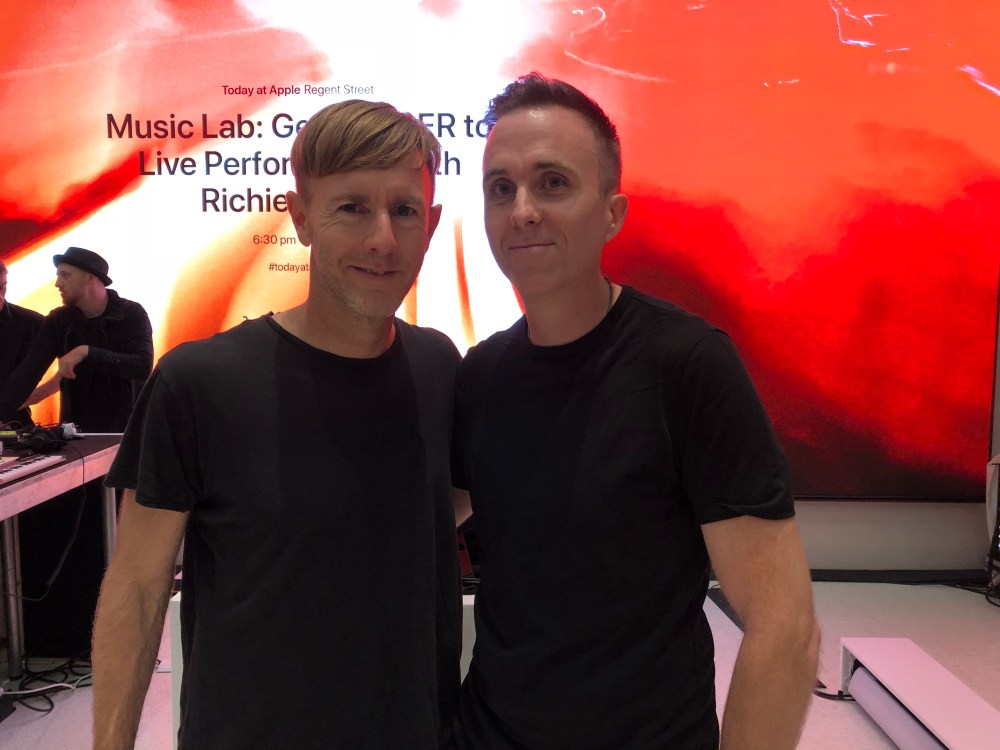
Richie Hawtin with me at Apple Store, London. 16 Sept 2019

I had the opportunity to meet Hawtin, share some music and ask him a few quick questions about how he visualises his show. Hawtin explained that they use ‘Touch Designer’ for the visual aspect of the show as it gives them the versatility with live, infrared cameras, layered effects and visuals. The visualisation is controlled by other members of his team, so he can concentrate on his performance, which involves both DJing and live jamming with his instruments. I guess what I am trying to achieve is control of both in the moment, which is perhaps unachievable from a solo perspective in good calibre. As I addressed in the previous post, I need help. However, getting to meet and talk directly with one of the greatest pioneers in the techno scene, and someone who has been an inspirational mentor to me for close to twenty years, was great. Hawtin has always been supportive in playing my music, he even said this time that it was nice to put a face to the music, as he had been enjoying playing a few of my latest tracks. Such feedback from a genuinely, nice guy who gives the time to speak to fans and admirers alike was overwhelming. It has inspired me to continue exploring with greater belief in my potential, regardless of any personal ‘hang-ups’ I may struggle with on some days. Onwards.
IMG_7758.jpg

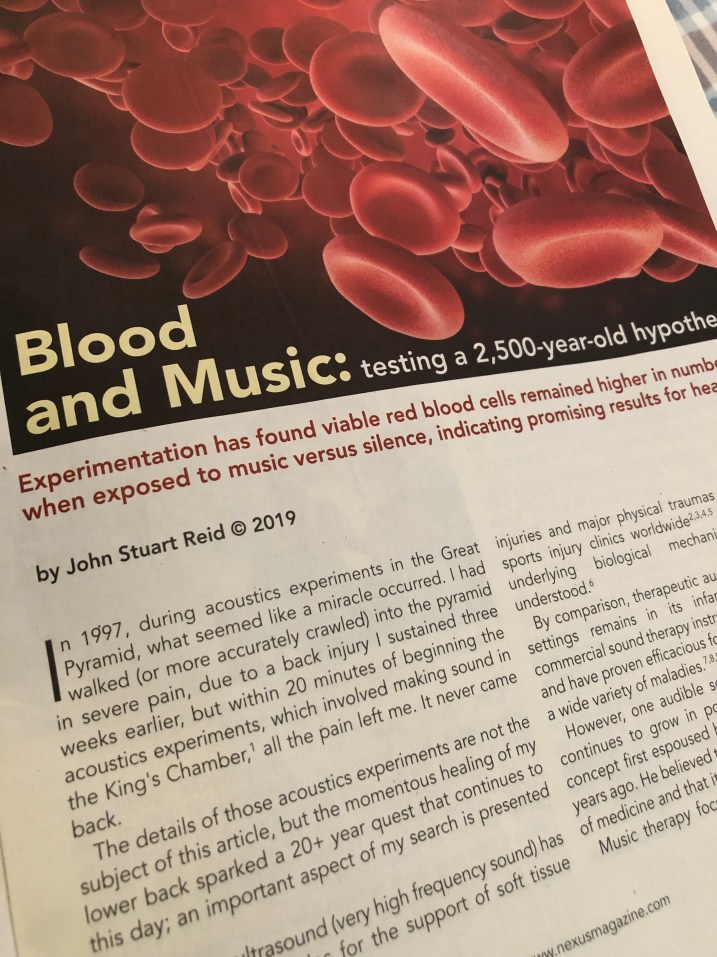
Blood and Music: Nexus Magazine, Aug/Sept 2019

Another mentor who has re-emerged these past few days with an insightful paper, is John Stuart Reid. I first discovered Reid when I began researching cymatics and his creation of a cymascope, around two years ago. From my perspective, Reid appeared to possess the passion and drive to share the wonderful phenomenon of sound being visually accessible. His work defiantly sparked my ideas and gave me the inspiration to at least give it a shot, however his latest paper has excited me even further. Having been born from a crowd-funding campaign, Reid has examined the beneficial rejuvenation of red blood cells when exposed to various forms of music. His experimentation with blood held in a neutral environment, versus being exposed to various genres and styles of music, determined that music showed enhanced rejuvenation of cells. Not limited to that discovery, his results also demonstrated that music with increased low frequencies, notably Dance-Techno-House, as Reid categorised, showed greater cell rejuvenation than classical or other alternatives (Reid, 2019).

It could be considered that dance music forms a connection with the human heart, with 128 beats per minute (BPM) speculatively being an optimum pace for someone dancing. Regardless of this, it seems that techno is prospectively beneficial whereas blood is concerned. This research potentially opens up prospective avenues regarding sound therapy for tissue growth and recovery. Reid has also pursued research into discovering the sound of healthy and cancerous cells, plus captured their unique cymatic formation (Reid, 2018). It’s evident from observing these visual formations as to how distorted the cancer cell seems in comparison to the healthy cell. Perhaps there is scope for sound treatment for cancer, which has allegedly been previously utilised in Chinese medicine to shrink tumours. Albeit, the latter is a form of chanting completed by doctors, in an evidently old, questionably credible video.

Without covering too much ground in the post, I have to ask myself; why am I excited by sound as a treatment and healing phenomenon? Well, I would like to educate people about the power of sound, not just through listening, but through understanding its role in the physical make up of our beings. That is why I have been attempting to visualize my music. Not only that, but also how going to a live music show could be therapeutic for everyone attending, not just from a social or excitement perspective, but unknowingly for the human body. I would like to make that a reality and it’s what I am considering researching for my PhD.

References:
Reid, J.S. (2019). ‘Blood and Music: Testing a 2,500-year-old hypothesis.’ [Online]. Available at: https://experiment.com/u/8qj2Mw. [Accessed: 23 September 2019].
Reid, J.S. (2019). ‘CymaScope Imaging & Analysis Of Cancer Cell – Water Conference 2018’. [Online Video]. Available at: https://youtu.be/1hJ-aMtdg7w. [Accessed: 23 September 2019].
 

Reflection: I have been contemplating for a while, but have I been inspired to continue?

This is my first blog post in a while, so I should address that. Why the four month hiatus? Well, I felt quite critical of my show after returning from Beijing in April. It was apparent to me that I needed more decent music available to showcase, plus an enhanced element of real-time visualisation. Perhaps I’m being too much of a perfectionist, as I’m well-vested in the scale a live show takes to be curated and performed well. Multiple team members and an acute plan towards achieving effective execution every time. Currently I’m single-handedly writing music, creative visuals, setting up and performing. The ideal scenario would, as originally suggested, have an installation available in the venue projecting cymatic formations directly to screen.

Having researched the options available, a live feed through Resolume is perhaps the best for a cymatic base and overlayering textures, other visuals in real-time. However, this is perhaps a tall order for the performer on stage. Reflecting back to the Beijing show, mixing one track into another after reverse engineering the visuals in Final Cut, even with the help of sync and making use of the visual effects in Cross, was busy work. But why? Perhaps this is because some of first tracks I was playing did not fit well together harmonically, in key. Plus, the track analysis in Cross just was not as efficient as Traktor Pro. As many digital DJs will understand, when a track is analysed incorrectly at half or double its tempo due to strange beats, or time signature, it’s sometimes awkward to perfect and requires constant nudging. Like using a turntable with poor torque. Spending more time perfecting this would have reduced synchronisation issues and enabled more freedom to manipulate sound and visual on the fly. I think Cross is a great program, but lacks the professional solidity of alternatives like Traktor Pro, plus it was due an upgrade.

mixvibesdvs2jpg

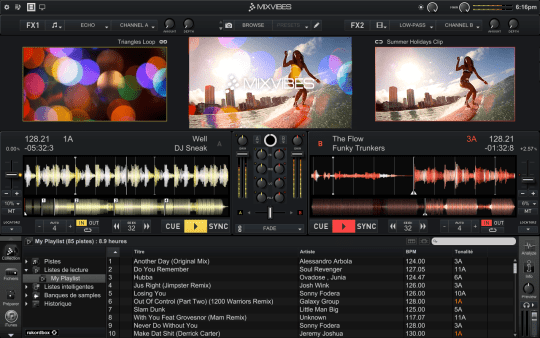
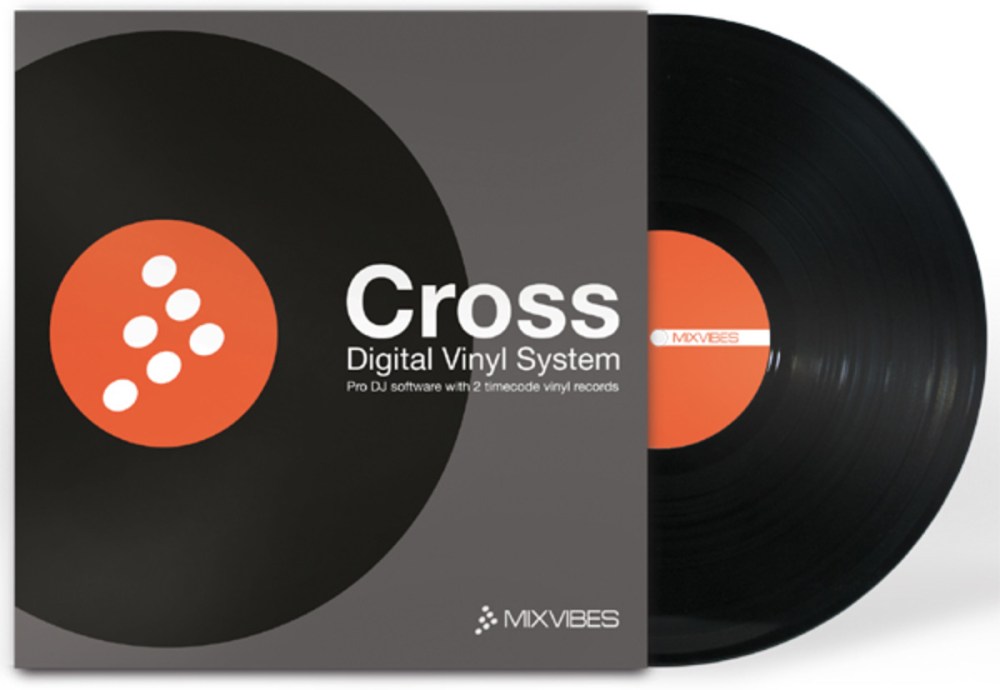
Cross Timecode Vinyl


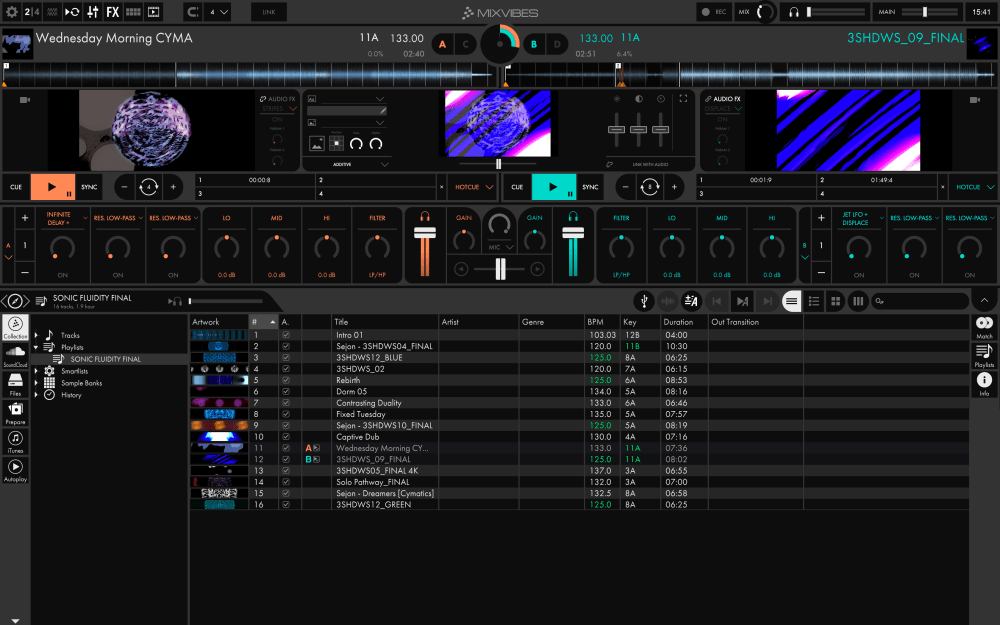
Initially wanting to make this a DJ concept, I managed to acquire some timecode vinyl from Mixvibes, plus the new release of Cross DJ 4 over the Summer and began experimenting beat-matching my tracks using turntables. It wasn’t great. There is potential, however I need a great deal more music available and, if I’m totally honest, the cymatic aspect is beginning to bore me. I feel the visualisation needs variation and diversity, perhaps dipping in and out of cymatics but including other abstract visual material I continue to enjoy filming. On a positive note, Mixvibes have given Cross a real solid update and the interface is vastly improved and no doubt the capabilities. However, the processing power still seems too much for my top-specification, 2018 MacBook Pro 15.

Screenshot 2019-09-05 at 15.41.46.png

Cross DJ Pro 4.0 Interface

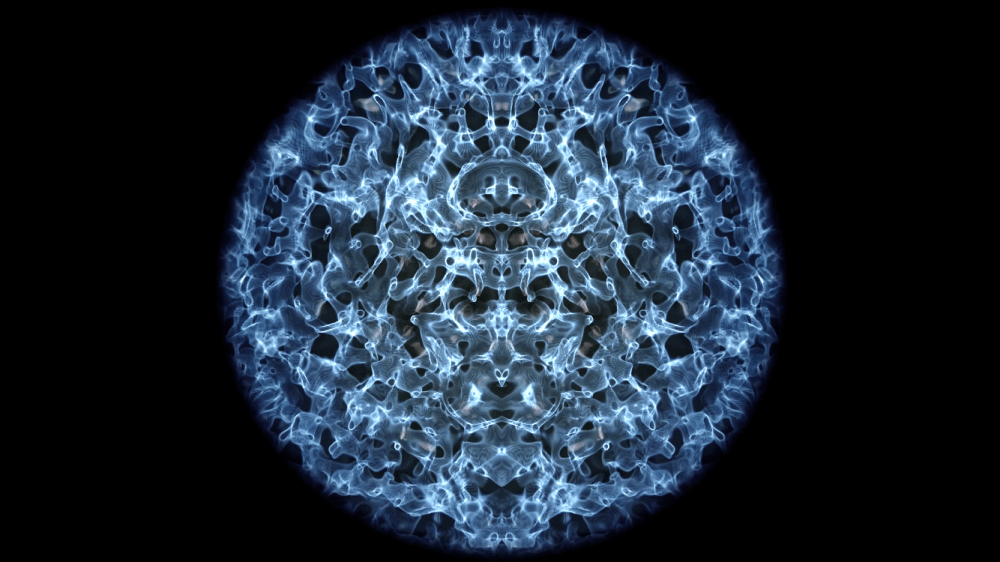
All of these issues are minor in reality, perhaps my main frustration is justifying time and keeping my anxiety in check. I’ve spent the past four months, trying to find secure, paid employment. At time of writing, it is exactly one year since I received the final module result of my Masters degree. I felt optimistic last year that I was in a better position to make something out of my music. Unfortunately, what I am now pursuing in terms of employment is totally unrelated to my Masters endeavours. However, in the last four months I have also managed to create plenty of great new music. There has been however, a severe lack of cymatic filming. Why is this? I guess my interest has swayed to try and focus on getting some music releases completed. It is ever more competitive to find paid employment in this industry, but also the same for getting record labels to listen to one’s music. I figured I needed to focus on finding a sustainable income, or at least gaining some exposure from music, which in turn might project this concept into reaching a greater audience. I also lack belief in what I’m doing because I’m often around people who don’t understand why I’m pursuing this endeavour. That’s not exactly encouraging but it doesn’t stop me. Just makes me question myself into redundancy on anxious, challenging days.  The few times I have filmed cymatic patterns in my new tracks in recent weeks has proved interesting to see, although reobtaining my optimum camera settings and lighting proved to be a hurdle. Rookie mistake: document every camera setting and position with great intricacy. I also rediscovered a track that was shelved from completion and subsequent inclusion in the Beijing show. The screen grab below demonstrates the intricate detail that I was achieving after an effective, experimental filming period.

IMG_7456.PNG

Sejon – Dreamers 002 (Cymatic Pattern Screen Grab)

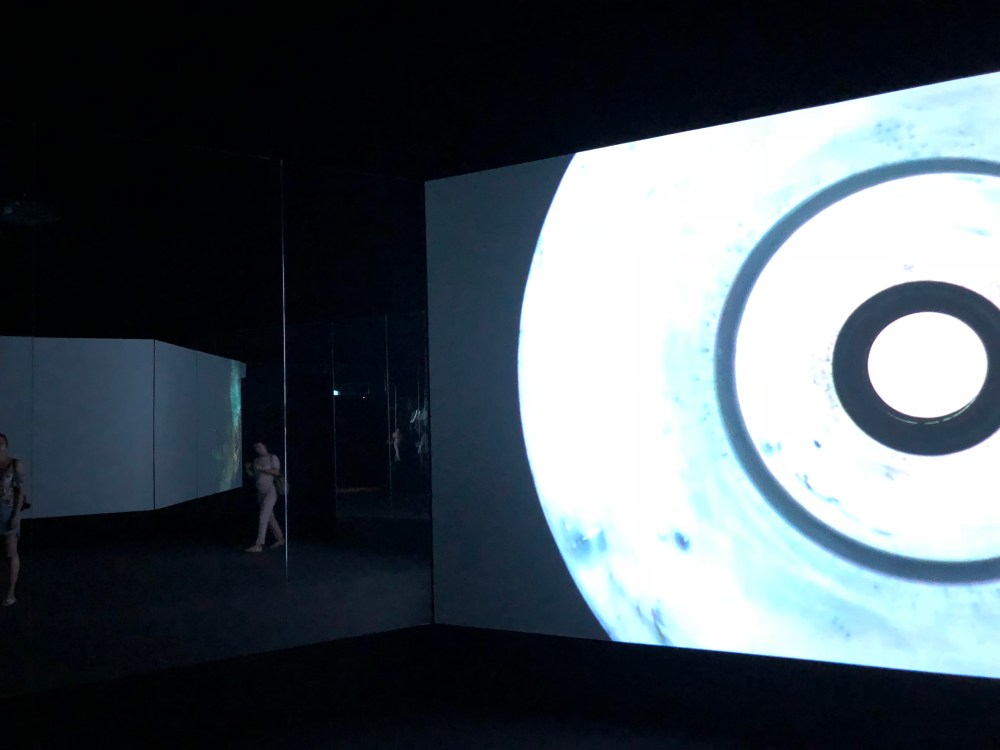
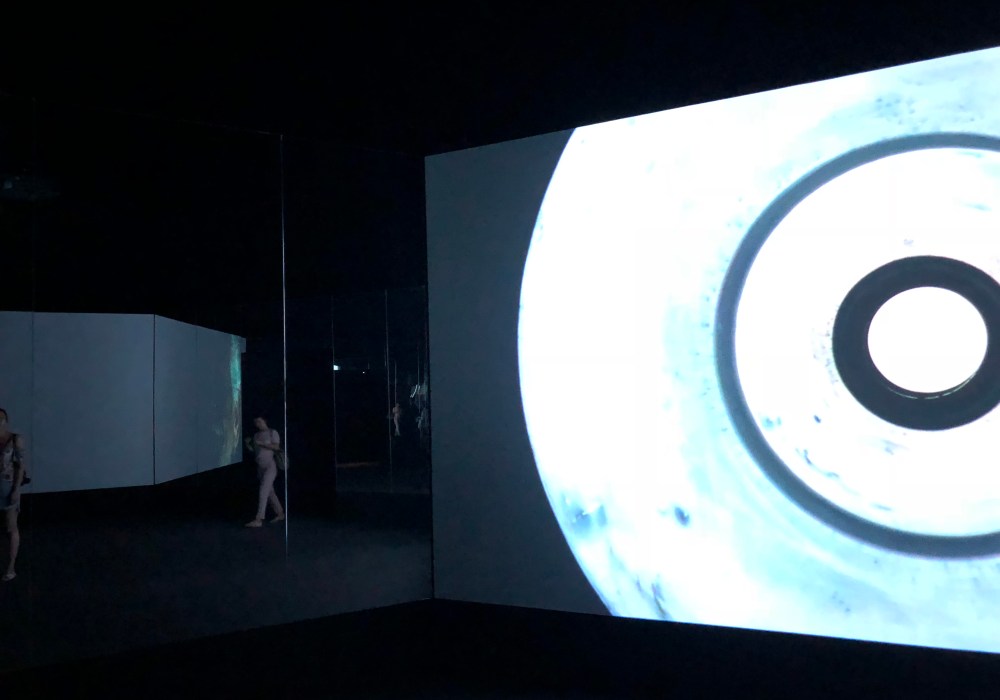
I am lucky though, whenever I travel to Beijing to visit my girlfriend, she encourages me to be inspired by art exhibitions she takes me to. She also pushes me to keep researching as she sees its potential and validity in my life. There has been very little studying of research papers on cymatics or any genius ideas on my part. However, I have been inspired significantly by other artists, which is a blessing. Yesterday, I saw an exhibition from Doug Aitkin in Beijing, which has a clever use of three projectors and screens, plus mirrors in a hexagonal, dark space.

IMG_7396

NEW ERA by Doug Aitken – Farschou Foundation, Beijing, 2019

The 360 degree infinite visualisation, titled NEW ERA is excitingly, trippy to say the least and made me think; wow, my show would look good in here. Without wanting to copy Aitken’s concept entirely, it does prove extremely effective on the visual aspect, plus at the stage in the 21 minute loop where some mechanical, techno-esque music drops. Aitken embraces the first use of a cellular phone in 1973, with the synopsis explaining the following:

“The narrative within this work disintegrates and abstracts, mirroring how the diametrically opposed notions of connectivity and freedom have been underlined in this paradigm-shifting moment in history.”

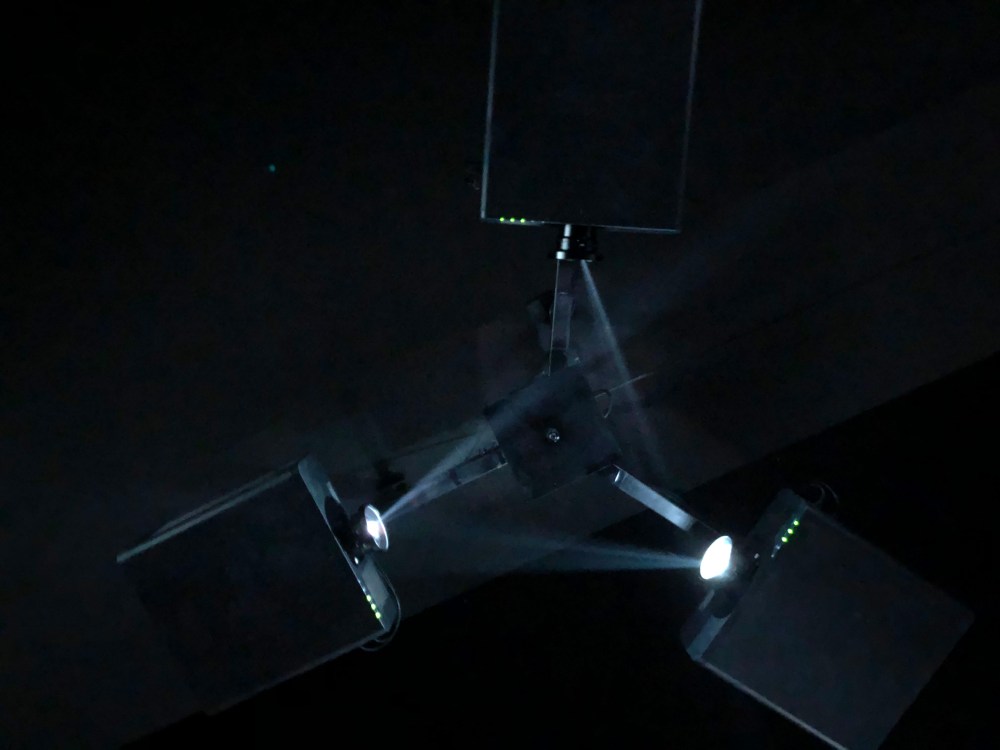
It is definitely a concept which works effectively and would be highly stimulating and immersive in a music performance setting. Having observed the exhibition layout in some detail, the room is built in a hexagonal formation with three giant screens on certain walls. The remaining walls, aside from some entrances to walk through to other rooms, are made up of mirrors. This ensures that the projections are reflected infinitely throughout the room.

IMG_7391.jpg

NEW ERA:  Projector Placement

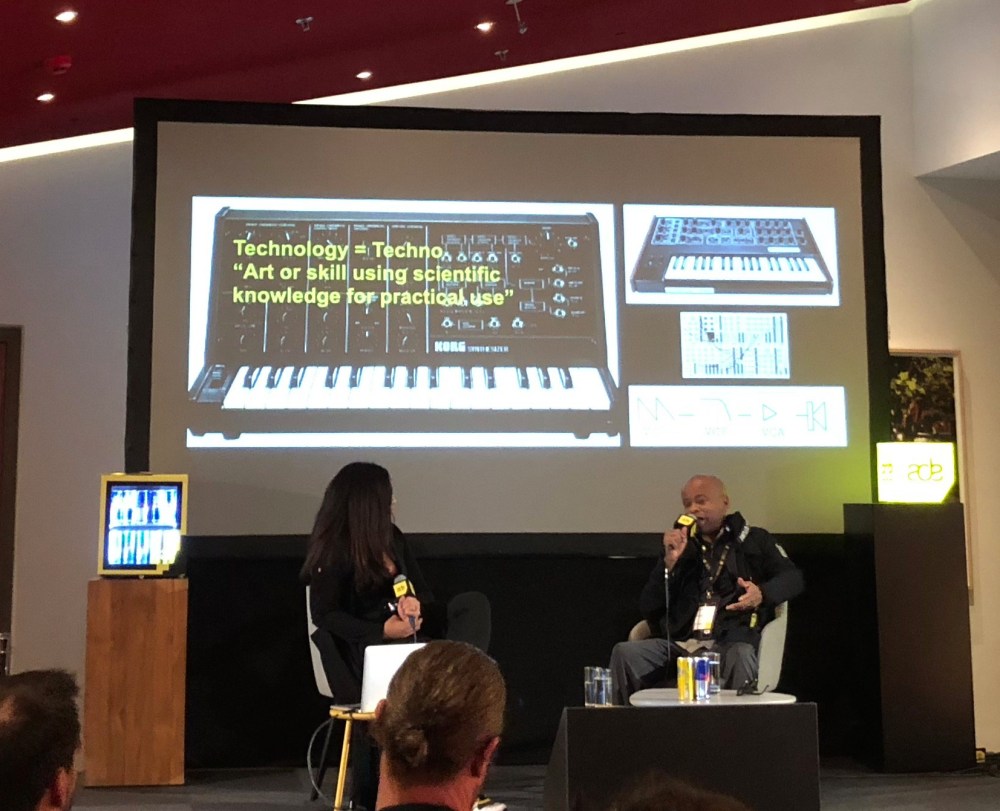
Taking inspiration from this one exhibition, makes me reflect back to ADE when I spoke to Juan Atkins and felt inspired to actually make something of this. If there has been one factor which keeps emerging in my mind which I can no longer ignore, is that I need help. I need to collaborate with other visual artists to make this happen with as much potential as possible. It may take some time, it may not see the light of day for a while but great art takes time, money and expertise. We’ll see what happens in due course.

Reflection: Sonic Fluidity in Beijing – did everything go to plan?

It is a few days since I performed my ‘Sonic Fluidity’ show in Beijing, so how did everything go? Well before I get to that, I have to address a few changes that had an impact on the way I could present and perform the show as it was intended. In the week leading up to my show time, it was apparent that amid the ongoing re-scheduling of other events at the Three Shadows Photography Art Centre’s weekend festival, my show intentions were perhaps misunderstood by some members of the organisation. I say this in the most friendly and constructive manner, as all the staff at Three Shadows were fantastic in their efficiently and assistance in actually executing the show within their events plan.

IMG_4810

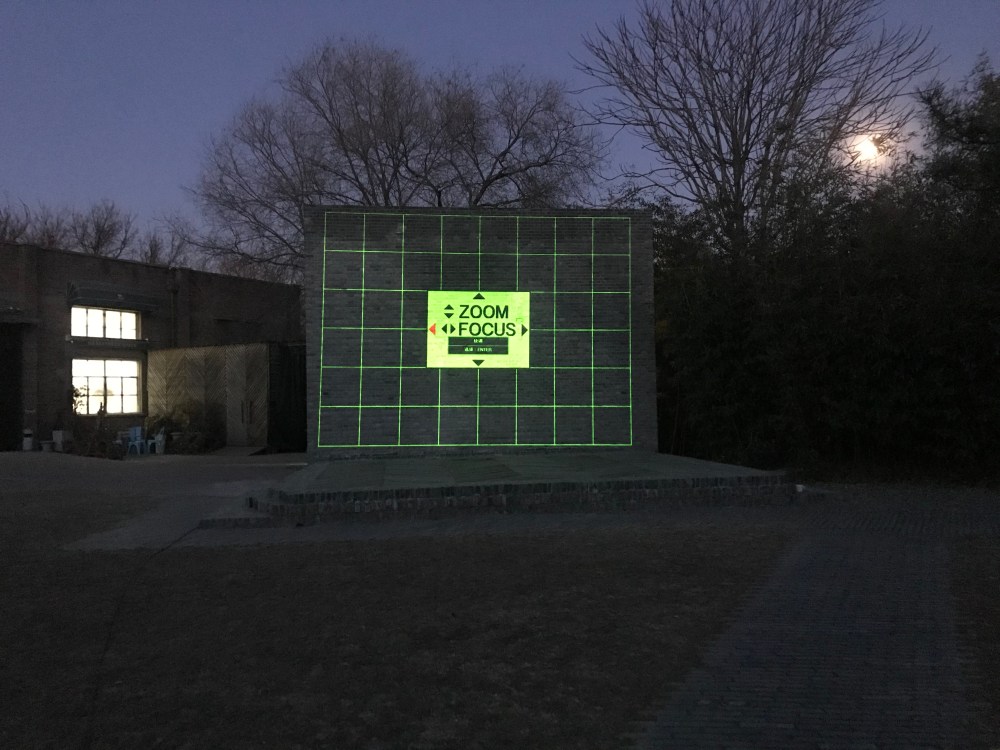
Testing Projection After Sunset

The initial idea was for my show to be something at the end of the day, after everything else, for people to have some drinks, socialise and relax to music and visual stimulation. Just like a DJ set in a club or festival right? I was meant to be outside, after 7pm when it would be dark, on this cool stage area with a large, brick wall acting as a screen behind me. See my previous posts for full details.

However, it was perceived that it might be too cold for the audience to remain outside after dark and clashed with a proposed meal time for visiting guests, exhibitors and delegates. So the decision was made to change my show time to 3pm, and move me inside to one of the exhibition halls. This was frustrating initially, but not the end of the world – the space was actually very good and hosted a suitably placed DJ booth cutting in the wall, which for any pop-up party would be ideal. I arrived in Beijing the morning before and tested the projection that evening. It looked good, I was optimistic. However, on the day it just was not quite dark enough in the exhibition hall. The Three Shadows staff did a great job of blacking-out the door immediately opposite the DJ booth, plus all skylights at my end of the exhibition space, but the light crept through from the far end and diluted the projection somewhat.

IMG_4817.jpg

Projector Positioned

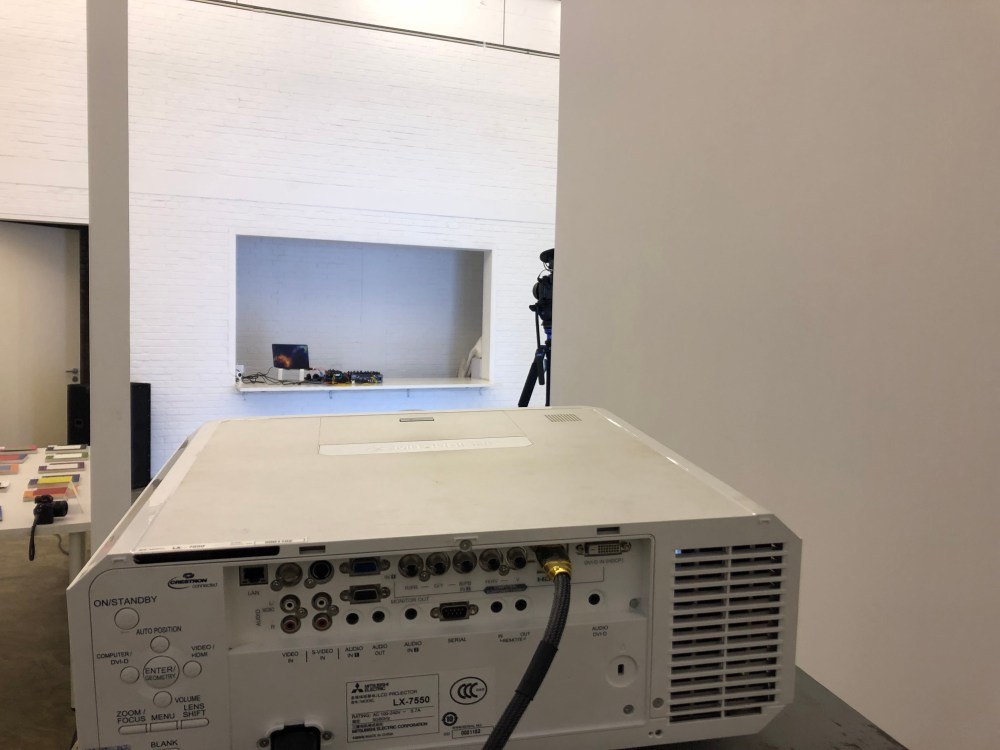
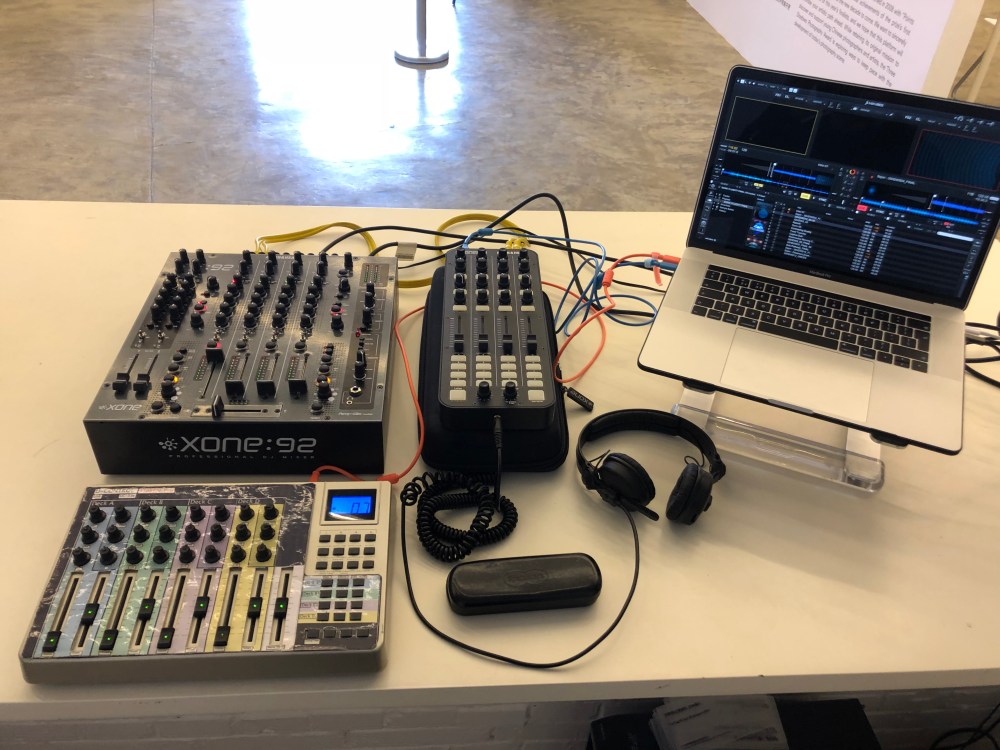
There was also no sound system. I was under the impression that the schedule changes were due to allowing my show usage of the small in-house PA system, before it was moved to the outdoor stage for the awards ceremony at 4pm. However, when I arrived at 11am, the PA system was already set up outside playing a mixture of classical and popular music to the attendees of Three Shadows. The staff were reluctant to move the system inside for my show, so for a while I had no sound. However, one staff member quickly resolved this and hired a larger speaker in. Great! Or was it? Not initially, as the house PA system had active monitors, whereas this speaker also required an amplifier. The same staff member then made a call and soon enough a rig appeared complete with AMPS and a Mackie mixer. I plugged the single speaker into the Xone 92 mixer via the Mackie mixer – mono had to do, and used my audio engineering skills to get the master level in a good position. This allowed me significant room for signal gain on my UC-33 MIDI controller and the Xone 92. It would have been better to have the sound system figured out before the day, but Three Shadows is not a music venue and the staff were focussing on the main aspects of the day – the exhibition and award ceremony. Fortunately, I am an audio engineer and a DJ who keeps his headphones on for the entire set – I need definition which I rarely get from booth monitor speakers. Perhaps I have had some terrible gigs in the past, but this time there was one speaker and no monitors at all. Some artists might have a meltdown without their ‘performance-comfort-zone’ provided, but sometimes you’ve just got to make the best of what you’ve got and crack on regardless of imperfections.

IMG_4816.jpg

DJ Booth Setup – CDJ and Vinyl Purist Haters Gonna Hate

As for the performance itself, I will always be my own worst critic unless it was seamless. Therefore, I’ll say this with a positive attitude, it was ok. To be honest I started off in tricky territory with slow, ambient music and then moved through latin, tribal drum style house, broken beats and funky techno tracks, before settling into a flow where all music was harmoniously key-matched with conventional, four-four beats. Early on a few of the tracks did not mix well together, regarding key or structure. I guess not all music can be blended smoothly and fluidly, however I pride myself on tight, neat mixing, or at least so the tracks do not appear to be aurally attacking each other. It made me cringe a little and I was glad that the audience was not predominantly a music, or DJ-wise crowd – so perhaps the holes weren’t so obvious. As with all DJ sets or performances, I was just getting warmed up and into the flow by the time I had to stop. The set time itself was cut from one hour to forty minutes, which I stretched to forty-five before I was stopped.

IMG_4933

IMG_4820IMG_4822

I placed two cameras to capture the show. One GoPro off to the side in the DJ booth and my DSLR with attached shotgun mic immediately in front of the DJ booth, beside the projector. After spending such a large amount of time and money on this project, I at least wanted to have a video that I could showreel to other promoters or share for my portfolio. Unfortunately, the DSLR was slightly out of focus and without anyone to monitor it, this remained for the duration. The sound was not captured very well either. The GoPro captured a good picture, perhaps unfortunate to also capture a large empty space towards the opposite end of the exhibition hall. The GoPro was connected directly to the ‘Record Output’ of the Xone 92 and although a passable recording, the built-in Limiter’s ‘side-chain pumping’ is somewhat annoying for any audio engineer’s ears.


IMG_4819

DSLR & Rode Microphone

In reflection, all in all it was a great opportunity to test out my music, visuals and the concept. The next stage will be to successfully build the installation in the venue with a live feed integrated through Resolume, while music is played live via turntables. Cross DJ had some good effects, but the platform itself is not reliable or stable enough, even for a top of the range MacBook Pro 2018. I am in the process of finding a venue with which to test this and will continue to update the blog in due course.

Reflection: Been a while, but I’ve been busy…I hope?

So it has been a couple of months since my last post, and in reflection of that it seemed pretty negative in many respects. The whole principle of writing a journal in an open, honest blog is to challenge and be critical of the entire process. I was practically moaning about having to invest in a new Apple MacBook Pro in my last post. There’s no denying they are less value for money these days, with their ring-fenced upgrading capabilities. However, I am lucky I can just buy one – if I couldn’t, then I would’ve been stopped in my tracks entirely. As it turns out, the new Mac is just the ticket.

So far I’ve managed to test Cross DJ with video output, without excessive CPU pressure, or lagging in the feed over a ten metre HDMI cable, which is in itself risky territory. I’ve also attempted using Ableton and Resolume together, which it handled fine as well. Expanding on that latter point, I’ve had to address some opinion in how I am performing the show, which has given me some personal doubt and frustration. Perhaps I am too sensitive, likely. Maybe I care about how the show will be received, very likely – although I do not like to admit or surrender to that point. The show is being treated as a prototype, as with anything it will evolve with time and with greater capability and degree of intuitive authenticity.

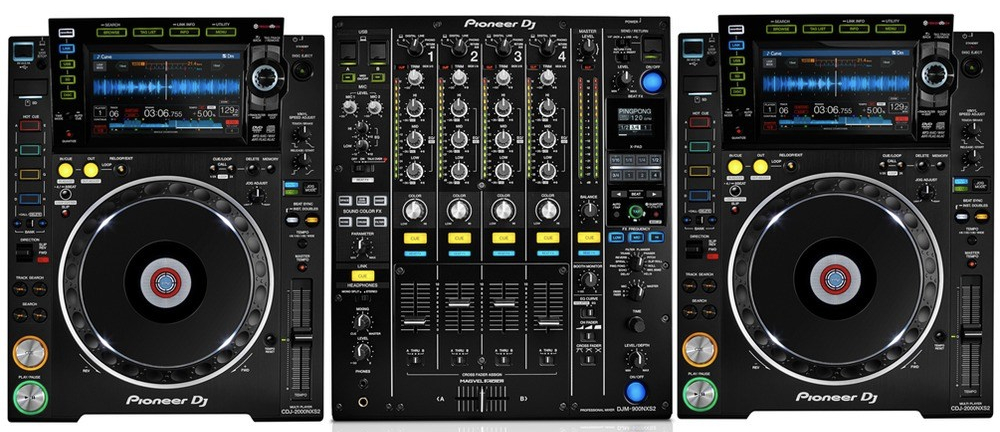
It seems that the process of bypassing an actual installation in the venue, for pre-engineered visuals fused with the appropriate music tracks has been put into doubt by someone close to me whom I hold in high regard, and is also a DJ and music prodcuer. The fact that I am using a laptop, with MIDI controllers on stage as opposed to turntables or more apparently, CDJs, has been questionned. Currently I do not own CDJs and choose to DJ using primarily vinyl, or Traktor Pro, sometimes with timecode vinyl, sometimes with MIDI controllers. Each format is a completely different way to play and has an impact on the energy and spark in each set. It’s frustrating to me that the concept of playing a set, of entirely my own music, a large portion of which has been created for the show, in equal unison to the visual element created for the show, is somehow less credible than plugging a USB flash drive into a CDJ and primarily playing a set of music acquired through promos and Beatport in the days prior? I don’t need to prove I can beat-match, I frequently do this with the same turntables I purchased twenty years ago, without analysed digital files nicely mapped to a solid grid to avoid drift. Lets face it, DJing with two CDJs is pretty restricted aside from the looping facilities and merely a convenient, safe, solid option for many travelling DJs. However, having three or four at one’s disposal makes it much more interesting and resembling a four-deck, layered Traktor Pro set without synchronization. However, how many DJs do you see covering the BPM counter in the corner of that big Nexus display? None! A CDJ is basically a computer, but because it was developed from initially having the capability of actually playing CDs (very rare these days), the medium up from vinyl, it is still regarded by some as a neccessity as a real DJ. Congrats you can match the BPM from the display and refine the none-existent drift from Rekordbox preperation. If anyone is asking me, CDJs are the easiest way to play a set. Plug in a USB flash drive, no need to have a laptop in the booth, no screen-wall between you and the crowd, perfect.

1507192554_4953

Pioneer CDJ2000 Nexus x2 & DJM900 Mixer

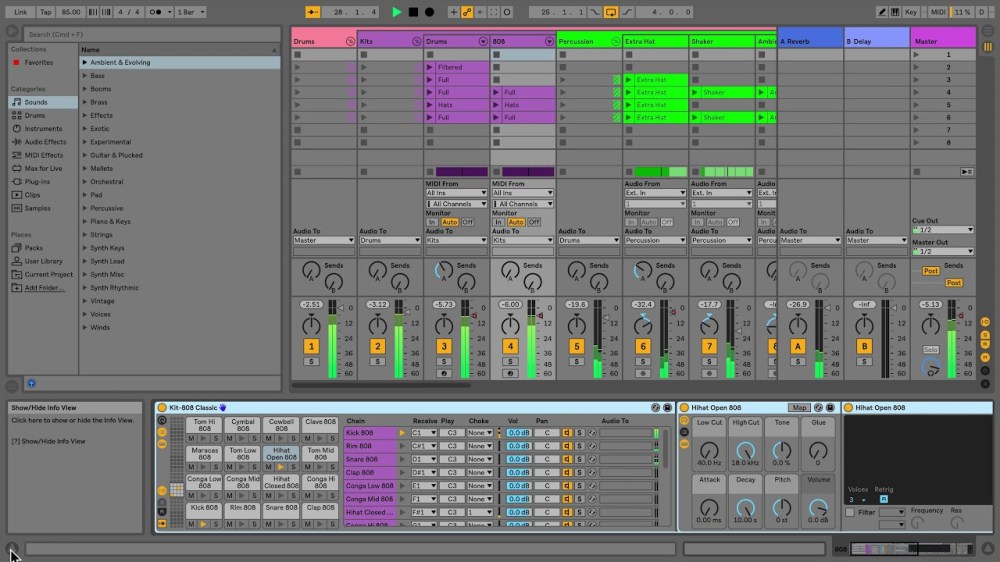
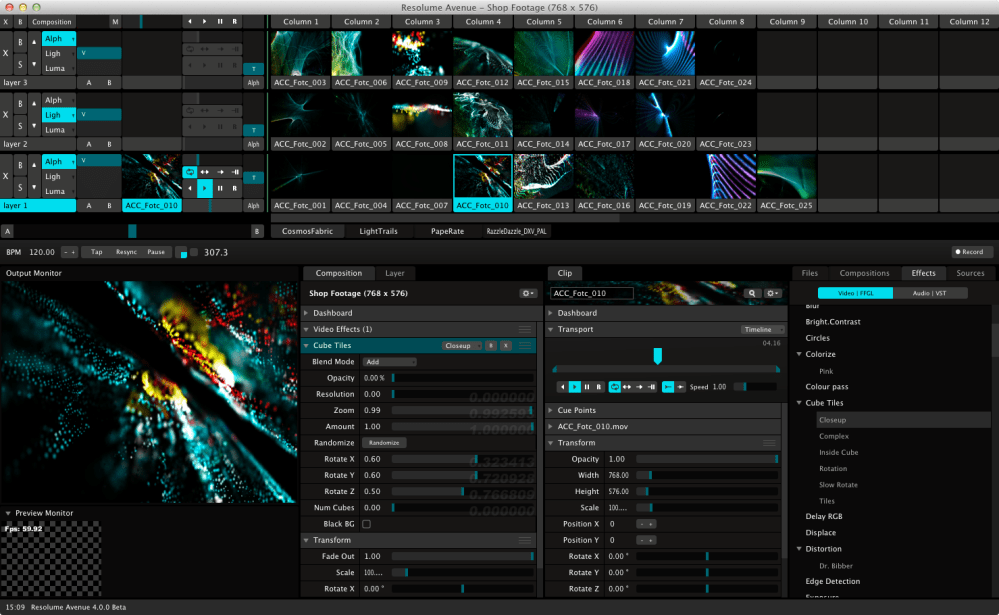
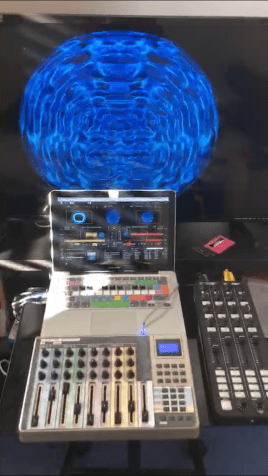
The reality of this venture I have undertook is I cannot currently justify spending the amount of three MacBook Pro laptops on three CDJ2000 Nexus, Serato and a compatible mixer with which to rehearse this show, when the venue are unable to provide the gear. Solution: play from a laptop on the fly with MIDI controllers. I have researched and tested the practicality of using Ableton Linked with Resolume. This method has the bonus of Ableton being capable of playing MOV files as audio, and launching the clips simultaneously in Resolume via macro MIDI mapping my Xone K2. However, having spent some time with the Live 10 and Avenue 6 demos, there is a slight lag in synchronicity between the two programs. Using Ableton also means I would need to ‘warp’ the files for synchronization within the session, while Resolume would be triggering unwarped duplicate files, and subsequently not matched in tempo. I expect there is a way to do this, which I have not discovered yet. With most Resolume and Ableton tutorials online, they simply show you that once you have triggered your audio clips in Ableton, with the Ableton Link you can then trigger video clips in Resolume and they will be matched in tempo. I have not yet found a working example where the video and audio need to be synchronized for the duration of the track/song – like a specific music video. There will be a way to do this, but I am yet to find it.

maxresdefault

Ableton Live 10

screenshot_resolume_avenue_4

Resolume Avenue 6

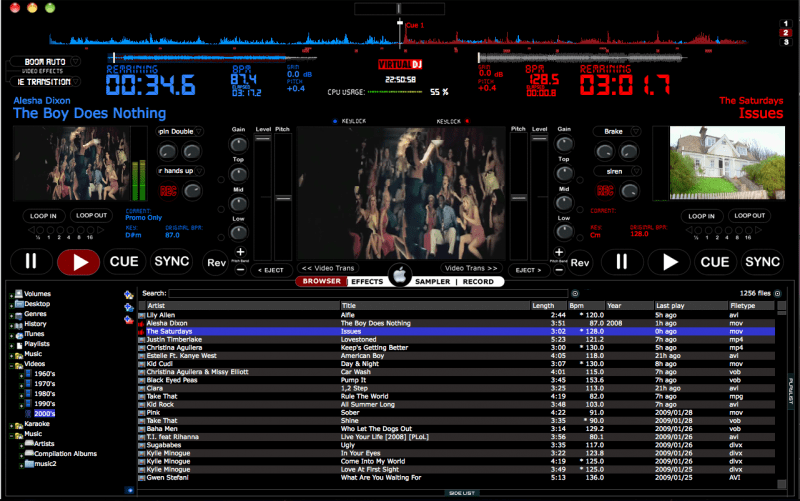
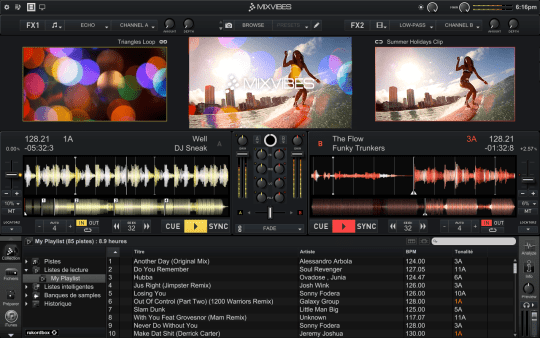
Another software package I have never previously heard about and saw in use by chance is Virtual DJ. At the hotel I was staying in Spain a few weeks back, there was an act performing a Queen tribute with visuals matching the music and backing track. I went to the toilet and upon my return saw the glowing laptop screen from the booth at the back of the room. I glanced over and asked the engineer what software she was using – Virtual DJ she said, claiming it was great. This resembled Cross DJ, Serato and Traktor Pro with its deck layout, but it was also playing video. How come I have never heard of this software? Why would I need to – Traktor is the most appropriate, solid application available from a techno DJs perspective, so why look elsewhere? I was curious, so I did some research and found that it is primarily used by scratch DJs, or those wanting to have karaoke sessions, automatic playlists with video output as such. Visibly it looks amateur and as Cross DJ is developed by the people that created Pioneer’s Rekordbox, I have decided to hang fire with my choice of performance software. Although I will say this – Native Instruments, please integrate video into Traktor Pro!

Picture 1

Virtual DJ Interface

The project itself has been challenging and perhaps a little ambitious. I wanted to ensure I produced an abundance of ambient, housey and dub techno tracks for this first show. Music which had decent lowend frequencies to generate interesting patterns. However, observing water motion with loopy, repetitive music is still somewhat boring – even for someone with my interest in the style. Therefore I decided to use effects in both FCPX and Cross DJ to manipulate and distort the water formations. Why not? There are no rules, like techno. The water is still the source of the visualization, it’s merely being manipulated in a creative way, as per my vision. Further down the line, having an actual installation in a venue with a live camera feed being piped to a computer running an application such as Resolume, would provide the desired results. Real-time, sound-source visualization with the ability to also overlay effects, other clips and manipulate in unison with the DJ or performer. As I am the DJ and VJ in this instance, I have to compromise.

I decided to include the classic speech for Hans Jenny’s Cymatics documentary in my introduction. This would be followed by dropping into an ambient, dub style track with an emphasis on the bass groove and subsequent Cymatic water patterns in motion. These are the only two planned elements of the show, with every other track following played on-the-fly as a standard DJ set, depending on the response from the audience presence. At time of writing I have completed around fifteen tracks, many of which were conceived with this show in mind and subsequently delve into dubbier and house territories, unlike my typical, techno musical output.

Reflection: Seeking a practical compromise, or frustrated by the challenge?

I know when I undertook making this project a reality that there would be challenges, but I am now realising that perhaps I did not consider all the practical aspects before moving forward. That’s part of the process right, or did I just not think about it enough? In the beginning I wanted to have an actual installation in a venue, reacting to the music being performed in real-time. However, having the reality set before me of executing a live show in Beijing in the Spring, I have realised that such a procedure is not practical without carrying multiple pieces of equipment and having a well-versed team to assemble it. I’m a one-man-band, and although I know I can apply myself in the practical sense of setting up an event and DJing, this is an entirely different set of circumstances.

Unlike setting up a DJ booth, some lights and a visual feed on a loop, this needs to have simultaneous audio and visual elements captivating an audience in real-time. Therefore, setting up a camera with a live feed of a water dish vibrating on a speaker is not practical. I cannot be expected to travel 5000 miles with these tools and incorporate them into a visual display without another human assisting in control, or managing the situation while I am playing music. Subsequently, I figured the best way to test this concept is to write a number of original tracks, then play them through the speaker and dish installation at home and film the results. The next step would be to fuse the master audio with the filmed video in Final Cut and add any desired effects, or other motion picture layers. This way I could black out the surrounding area of the dish and reduce the ‘raw’ element of the film.

6676814_800

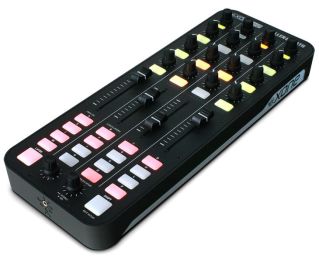
Allen and Heath Xone K2

xone-96-top2

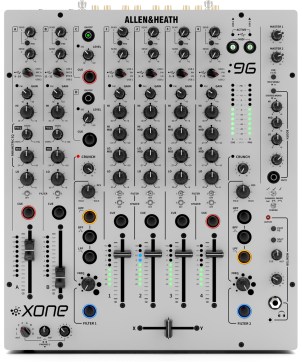
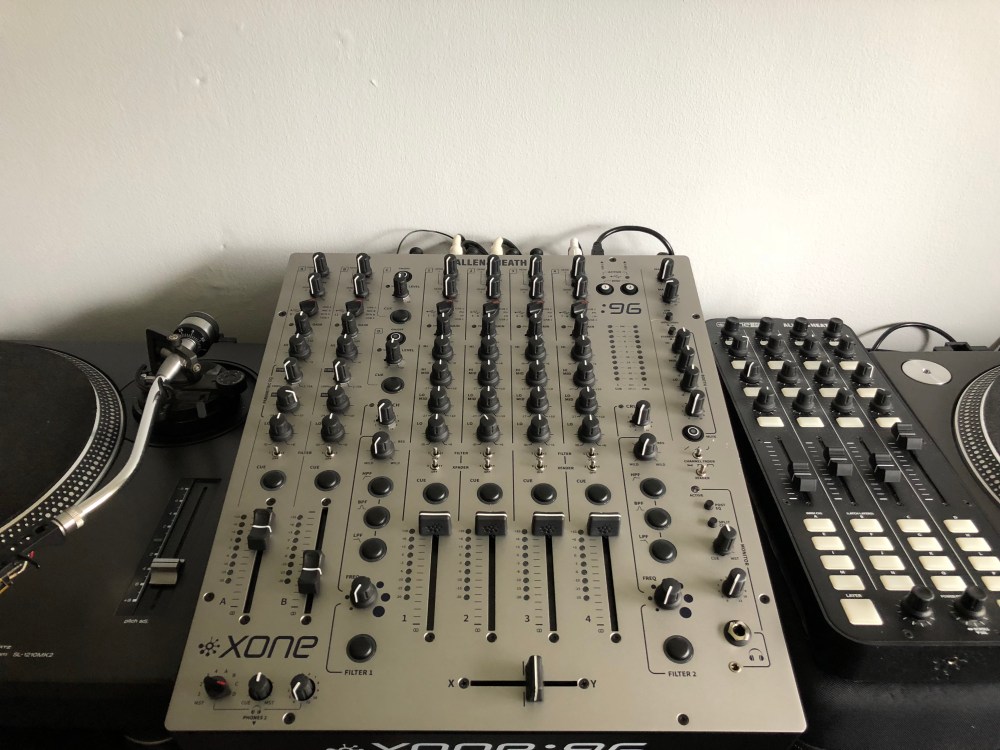
Allen and Heath Xone 96

evolutionuc331-e.ljmj9juebvrickarlubphvr3ffndbw

Evolution UC-33e

clarett-4pre-hero-909-330

Focusrite Clarett 4 Pre

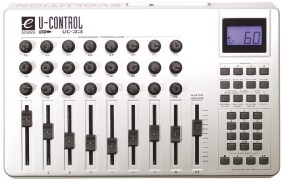
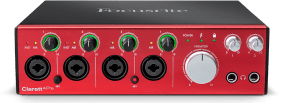
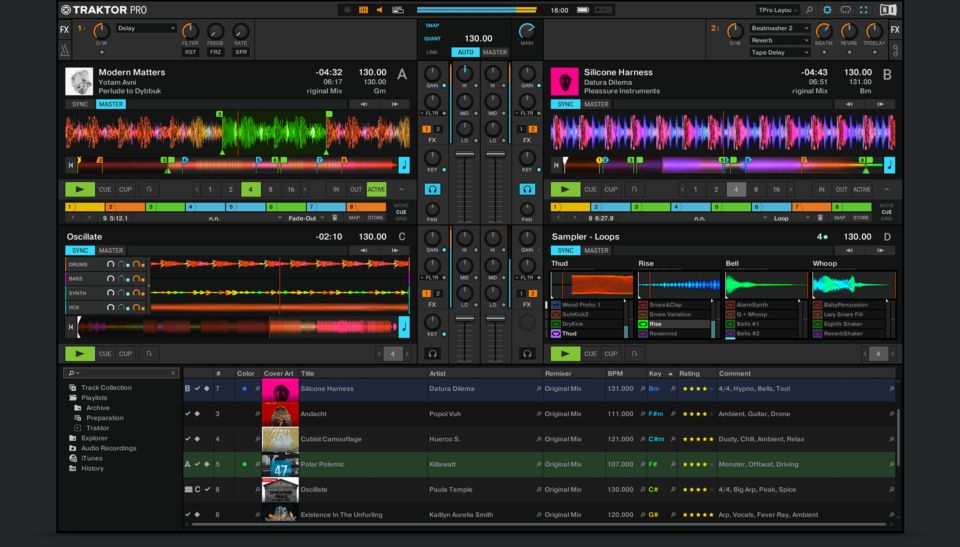
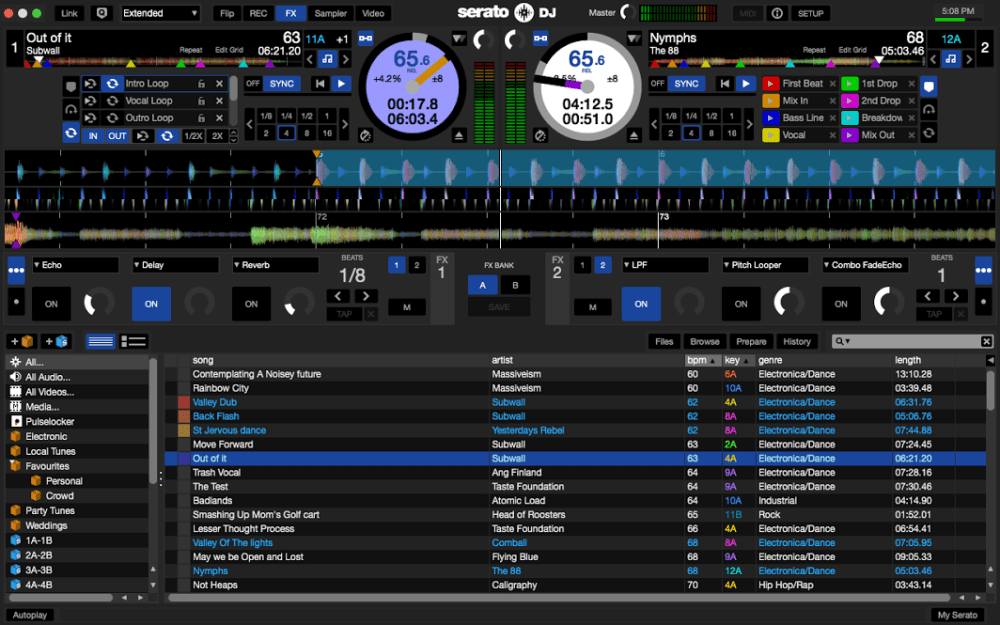
Then how do you perform this if it’s reverse engineered? Is it classed as intuitive, or just engineered? I see it as a recording of an intuitive moment. The question still arises, how do you perform it? Well, having spent hours and hours looking into this, some DJ software allows one to play video files, like audio files, and projected to a separate screen. Basically DJing with music videos. Sweet! However, my choice of DJ software in the past has always been Traktor Pro, and although this is the best available in many respects, it does not support the use of video. On the other hand, Native Instruments’ main competitor, Serato, does indeed. Sweet! Or is it? Nope, Serato does not support the use of third-party MIDI controllers, audio interfaces, or DJ mixers that are not on its list of ‘approved hardware’. Bollocks! So, the Allen & Heath Xone 96 mixer and Xone K2, which are both MIDI assignable with audio interfaces built-in, that I already own, are redundant. Plus the older UC-33e MIDI controller and Focusrite Clarett 4 Pre audio interface too. So if I wanted to use Serato, I would need to buy the software, plus a new controller with which to use it. At the moment, for one show, I feel reluctant to do this. Is this a negative attitude? In reflection I should be prepared to invest in the best software for the job. That would be Serato. However, I do not have desire to purchase any of their choice of primarily amateur style MIDI controllers, or audio interfaces. A solution would be to simply use Pioneer CDJs and a Serato approved DJM mixer. These are again pieces of equipment I do not intend to spend upwards of £5K at this early stage to rehearse on. Yes, a set of CDJs would be handy, but not essential without many gigs currently in the diary.

img-ce-traktor_pro_3_whats_new_01-4e3caaa366acd0ccec98befea0e11c9f-m@2x

Traktor Pro

26794

Serato DJ Pro

image_12503_1

Cross DJ Pro

dex31001-screenshot

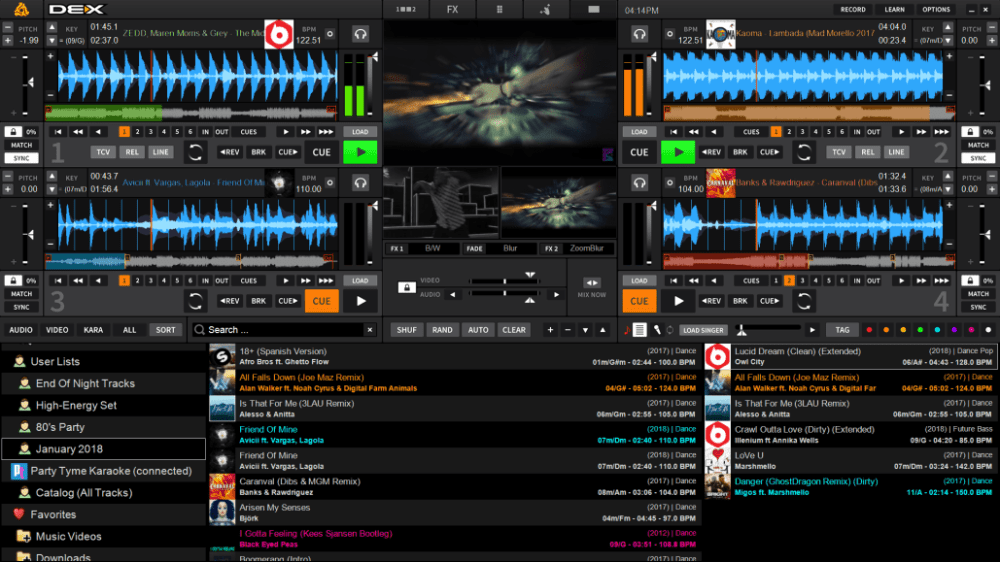
Dex 3

Other DJ software such as Dex 3 and Cross DJ, have similar capabilities to Serato, but on the positive side are open to all MIDI controllers and audio interfaces. Bonus! Or is it? Both applications are by no means as powerful, or professional as Serato, but I have to make a compromise. Having tested each demo, I decided to pay the £90 for the full version of Cross. This works a treat with video files and is compatible with all my audio and MIDI devices. Sweet! Or is it? Well, no. My laptop, a 2012 13″ MacBook Pro cannot cope with mixing video files. The video output lags significantly, plus it sounds like the fans are running to maximum. Therefore, I need to upgrade in order to pull this off. Thinking ahead, this is an investment I have to take seriously.

img_3425

Testing: MacBrook Pro 13″ 2012, Cross DJ Pro, Xone K2, UC-33 and HDMI Projection

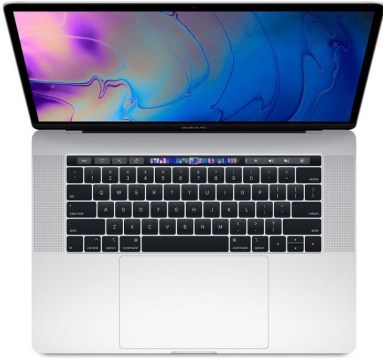
Having just spent £3K on a top specification 27″ iMac as my studio computer, I have felt kind of peeved I now needed to buy a new MacBook Pro. Apple have gone down in my opinion since Steve Jobs passed. Their laptops are no longer built for the user, but for their business model. Just the fact that one cannot upgrade the hard drive or RAM after purchase is scandalous. Plus, the lack of port variety means purchasing adapters. Looking back ten years, the now discontinued 17″ MacBook Pro had three USB slots, plus Ethernet, FireWire, Thunderbolt, Line In and Headphone Jack. Now it’s simply four USB-C ports. No doubt this is the newest, best technology out there but having to buy adapters is a dent in the pocket on top of the £3000 for the actual laptop. I may sound like a miserable, old man but I know many share my sentiment. It’s for business, not for the user. Nontheless, without making this post too tangential, I have invested in a 15″ MacBook Pro with a top specification graphics card and processor. After all, this needs to last and be capable of handling increasing video quality in the coming years.


MacBook Pro 15" 2018

MacBook Pro 15″ 2018

Spending the best part of a month trying to find suitable software, working MIDI controllers and which laptop to get, I am finally reaching a stage where I can primarily focus on music and video production. Lets not even get started on how much time I spent trying to find a cabin bag to house my Xone 96 DJ mixer, which I wanted to make the trip to Beijing with. Fail. Luckily the venue are able to source a Xone 92.

IMG_3427.JPG

Stage & Screen: Three Shadows Photography Gallery, Beijing

The event in Beijing is during a festival weekend and although this is a voluntary venture, it’s a great opportunity for me to test this vision in public. The Three Shadows Photography Gallery is a well-renowned establishment in the Chinese art realm and the venue for my debut show. I am grateful for this and need to contain my quarrels about worthy technical investments that will provide greater opportunities, with expansive capabilities and efficiency in their execution. I guess the inpatient perfectionist inside me is crying out for control, familiarity and simplicity in the face of the unknown. There may be times when I fall down, but I will always get up, dust myself off, laugh and continue. Otherwise what is the point in trying anything?

Reflection: Making real-time visualisation a reality, but is it what I expected?

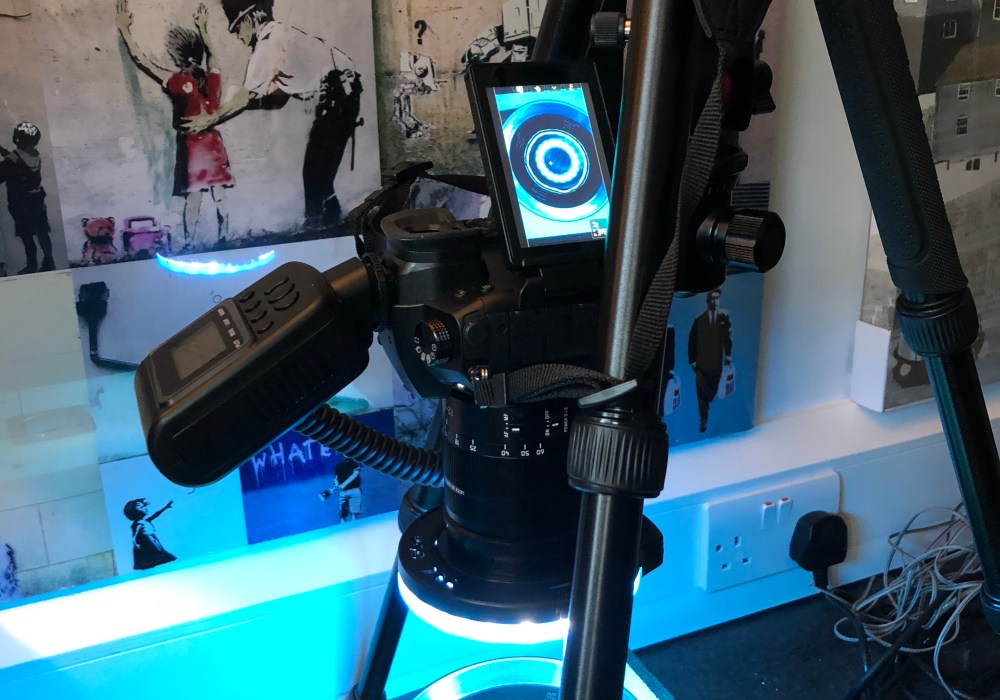
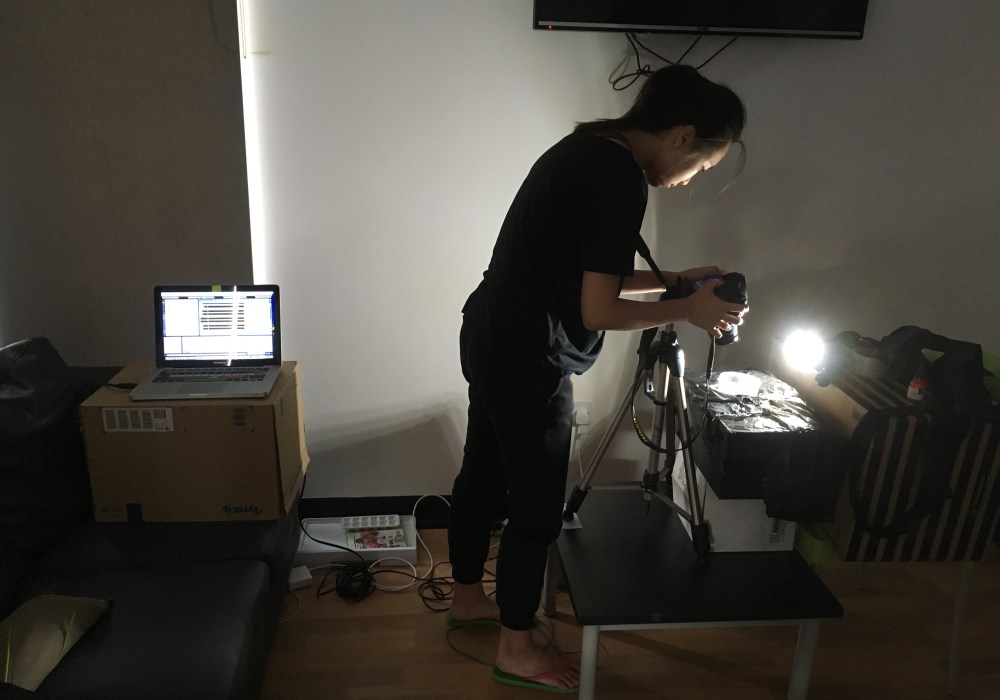
Having set up my newly purchased camera, along with the speaker and plastic dish, I was excited at the possibility to see water moving in cymatic formations to techno music. However, was it what I expected? Yes and no. Firstly, my tripod did not allow for the camera to be vertically central, placed above the dish. However this was quickly solved by ordering one that could. It arrived the following day, thank you Amazon Prime.

Secondly, the dish I managed to salvage was not ideal. Taking on board what other experimentalists have shared, the dish ideally needed to be black to allow for the camera to recognise light reflections in the fluid. The dish I initially tested had volume measurement markings on the base, so these were apparent in the footage recorded.

Finding another dish, which would offer a smooth base, allowing for no static, visual distractions when observed needed addressing immediately. My impatience was tested throughout this time as I tried to find a suitable dish by searching online. However, being creative is often the answer and stumbling across a plastic lid in the kitchen presented an opportunity.

The lid itself was from a pot of skin cream and bright white in colour. Therefore I set off to the local model store and acquired two different types of black spray paint and some sandpaper. There were a few manufacturing indentations on the inside of the lid, where the desired shape had been moulded. By using firstly a coarse, then fine textured sandpaper, I was able to smooth the inside base of the lid to a more desirable surface. This only took a matter of minutes and preceded the equally quick task of spraying the lid with black paint. A few coats later and a suitable dish was born. Utilising this worked particularly well and I began testing my own music, plus other tracks, played directly from vinyl, or Traktor Scratch through the Xone 96 mixer.

As I watched the water moving around the dish, it became more apparent that only bass and low-end vibrations gave predominance to fluid motion. This was recognised whenever there was a bass-drop or breakdown in any song’s sequence. With techno being a predominantly lowend genre, it dawned on me that perhaps relying on just the water motion to satisfy a visual show, might be lacking some variation. Having tested a variety of tracks, those with long release bass tones, textures and drones seemed to offer the best, lasting visualisation. Some with very rounded, syncopated beats also provided good visual patterns, however the aforementioned without beats seemed more immersive and pleasing on the eye.

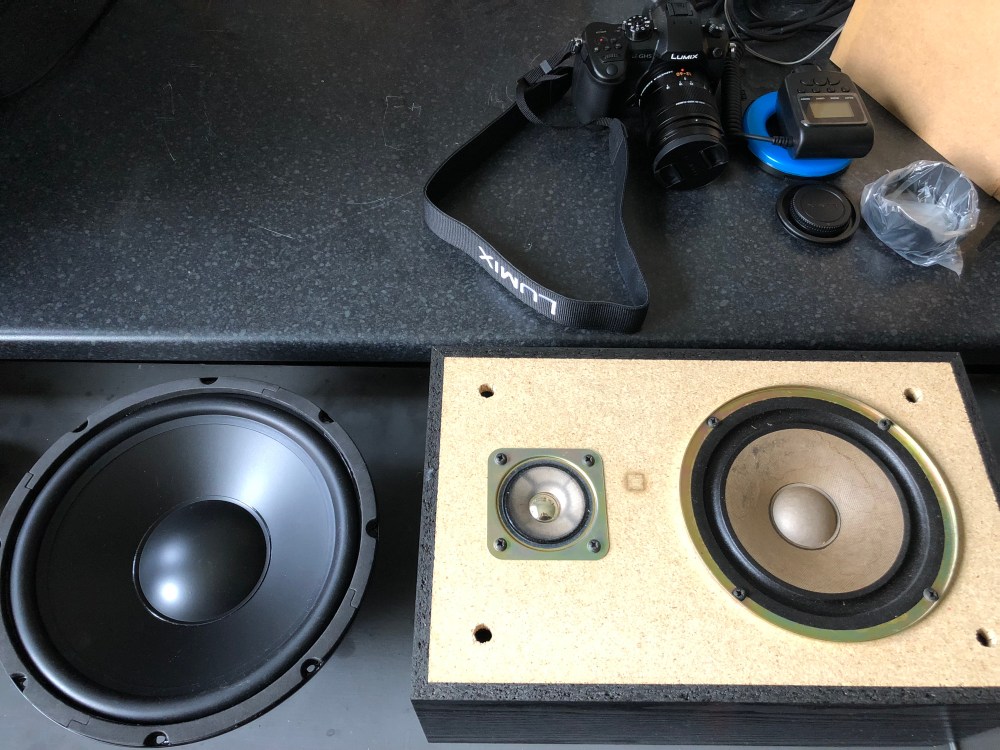
If I’m honest, I was disappointed by this because it would mean that observing the Faraday Waves solely in their raw form would not provide as diverse an immersive visualisation in real-time performance as I had envisaged. Nobody likes boring, especially in the age of low attention spans. Other practical factors such as the poor life of the lens-light batteries, plus the water jumping out of the dish on unpredictably ‘bassy’ tracks, didn’t fill me with optimism. I felt defeated somewhat. It seemed I had dreamt up this vision without considering any basic practicalities, or my own knowledge of sound vibrations. Even having just graduated with an MSc in Audio Engineering at Distinction level. I guess I was fooled by the acute vibrations of specific frequency visualisations from other practitioners work. Maybe I require a better speaker? Unfortunately the Sony hi-fi speaker is my only choice at present, as the sub woofer I purchased specifically for this research remains unused, without the means of wired connection. I have to resolve that soon.

Reflection: Where to go from here?

Having resumed my research into making intuitive cymatic visuals a reality, I have discovered, with ease, some particularly relevant examples of projected success. A group out of Berlin, naming their project ‘Sonic Water: The Laboratory For Water Sound Images’ appear to have exceeded the attempts of KIMA, primarily attaining the closest attempt, personally discovered, to execute cymatics in real-time visuals. My question is, how did I miss this when completing Research & Enquiry? This leads me to question the search algorithm efficiency of the university’s online library archive, as this was in the first few results of a simple Google search. Never mind, I’ve found it now.

Observing the practical execution of Sonic Water’s installation has given me some ideas as to what is needed to succeed in creating my own working model. Questions such as which camera to choose? How will it be installed? Will it require the camera pointing vertically downwards towards a speaker and dish, or an acute angle? What is the best option for lighting? What is the best method of connecting audio from a DJ mixer? The observation of Sonic Water and presenting myself with these questions, has made me aware of how inpatient I can be regarding this project’s somewhat slow progression. I guess as my environment has changed from the pace of living on university campus with academic focus, I have to self-sustain my motivation without guidance or being surrounded by people encouragingly attaining different objectives in the same field. It’s almost sometimes challenging to justify spending time doing this without having an attainable, graded deadline, or paycheck at the end of it. Cheers conventional, societal indoctrination.

Perhaps the best example of a functioning real-time cymatic visual installation I’ve seen online in a performance medium is by ‘Sophistafunk’ in 2014. Again, this is another example I failed to find during my research a year ago, why? Perhaps the YouTube algorithm does not serve the positive exposure of this educational technology. In over 4.5 years since the video was uploaded it has merely 900 views, seemingly low for something quite groundbreaking in its perfomance execution. Perhaps it’s the suspicion in me, but with the earlier discussed lack of sound research and cymatic presence in mainstream science, is there a reason this is the case?

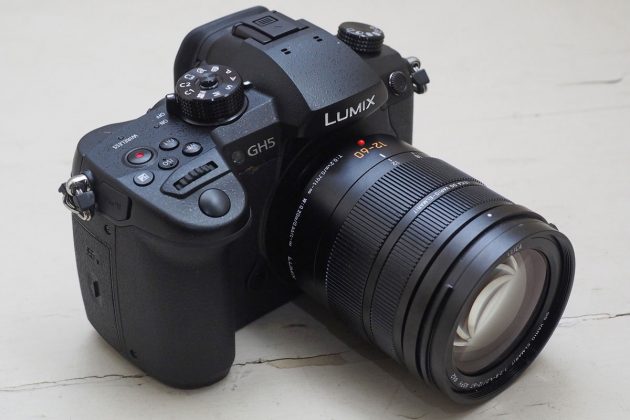
Panasonic-Lumix-DC-GH5-01-630x420

Panasonic Lumix GH5 Camera

My research led me to determine that a Panasonic Lumix GH5 would be the best camera for shooting motion footage in 4K, perhaps with or without a macro lens. So, I bought one. Additionally, I also purchased a lens adapting LED light ring and a 10″ subwoofer driver. I also upgraded my studio DJ mixer with the latest and best model on the market, the Allen & Heath Xone 96. However, successfully finding suitable audio cables to connect the 10″ speaker to the Xone 96 has proved frustrating. With a range of speaker cable adapters, it is perhaps a unique type I require compared to other amplifier and speaker setups. Having looked at the possibility of connecting to the Xone 96 with RCA or XLR, the speaker itself seems to require Z type Banana sockets, not plugs as commonly sold online. The fact there are no high street electronics retailers one can drop in, look and choose a suitable option is frustrating. This also makes me wonder if I should ‘up-sticks’ and move to London or, even better, Berlin to absorb myself in this project where necessary resources can easily be acquired.

IMG_2546 copy

10″ Subwoofer & Sony HiFi Speaker

From the perspective of providing an audio signal, the Xone 96 allows me to connect via USB to my MacBook Pro and utilise Traktor Pro 3 with full turntable scratch functionality. Plus easily play conventional records in the same setup. This has been a personal ambition for some time, but not affordable. I love to play vinyl and layering tracks with loops, so I figured investing in the Xone 96 and Traktor 3 was the most cost-effective option, setting me back less than a single Pioneer CDJ2000 Nexus. My DJM500 mixer of 16+ years needed replacing, so it was a necessary purchase which will also enhance this project.

IMG_2485

Allen & Heath Xone 96 DJ Mixer

I sense this post might be becoming tangential, but in writing I feel the need to address certain aspects. Why do I feel the need to justify these purchases? I guess this comes from never easily being able to afford such devices without incurring debt and the associated fear that goes with it. However, I am grateful that I currently have time and money at my disposal to invest and focus on making this project a reality. It is frustrating at times to justify all of this to those around me who don’t understand my intended vision. Those family members, or friends, who perhaps lean towards a conventional, conservative perspective and don’t understand, or relate to what I am trying to achieve. I’m sometimes undermined even by those as deeply involved in electronic music as I am, who truly believe what they think is better for me in the long run, without trying to understand my perspective. I’m not the most confident person at times, but I’m not a fool to take on board the lack of belief others have in me, which is an apparent projection from their own fear of unconventional practice. I don’t fear outside-of-the-box.

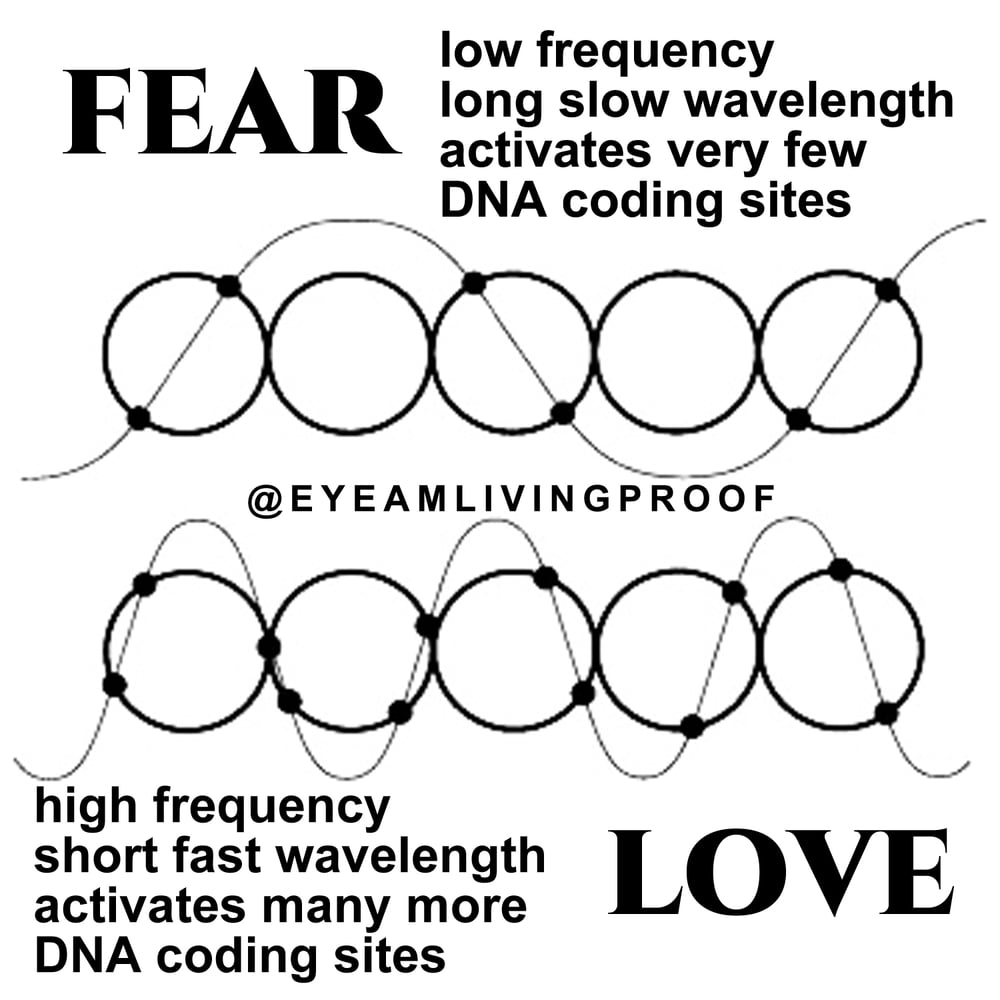
In another post I will explore the Love vs Fear perspective and how these are frequencies themselves which are apparent in our everyday lives and influence our decisions, interactions, relationships, opportunities and quality of existence. There is evidence to suggest our DNA is reacts to the frequencies of Love and Fear. Perhaps a skeptical perspective in some respects, but personally I feel that sound and vibration is responsible for a great deal more than we as a civilization are educated to believe.

1452718400762

Love & Fear

Undeniably, there will be ups and downs, bumps in the road, times of doubt and these will play on my mental health. However, this is part of stepping outside of one’s comfort zone. Deciding to relocate and pursue a masters degree at the age of 36 seemed like a ‘no-way’ option for some who shared their opinion with me. Others saw it as a great opportunity to get back on track with my love for music and our existence through sound. In the beginning I instinctively knew I had to go tot the University of Hertfordshire. It was an effortless choice, it felt right and I knew after visiting on an open day that I had to go. When I commenced the MSc, I sometimes doubted my decision out of fear, but with emerging belief it flourished and became the best decision I have ever made. Taking a wise leap of faith from one stepping stone to another is a necessity in life, it helps us grow. This project is the next stepping stone in this experience known as life. The seed is planted, may it grow and flourish.

Reflection: 11 Months Later

As I resume this research project, the title of this blog post makes me do just what it is meant to. Reflect. Eleven months have passed since I completed the necessary objective for the Research & Enquiry module on my MSc in Music & Sound Technology. However, it was never just for academia. The topic of research context was chosen with an actual intention to succeed in making it a reality, not just to tick the boxes of my masters programme. So what has happened since?

I have travelled to several countries in Europe and Asia with some interesting opportunities to shoot video for musical content and record audibly interesting sounds. Plus I earned a Distinction in my MSc. Additionally, just within the last month I have had the opportunity to experience Richie Hawtin’s CLOSE show in London and Awakenings at Gashouder in Amsterdam, during Amsterdam Dance Event (ADE). Both of which boast impressive visual aspects to the DJ and live performance spectacle. In the context of researching cymatics as an intuitive, real-time, music-performance visualization, not much. The demands of the MSc meant I literally had to shelve this project to focus on several other intense modules, incorporating studio design, synthesis and sound design, live recording, remixing, mastering and a Major Study. Those modules gave me a great wealth of knowledge and experience in elements of audio engineering relevant to existing aspects of the music industry, but not the experimental path which was always bubbling in the background through each semester. It is by attending the aforementioned shows that has re-sparked my passion for this project, which had been initially overseen by  other goals.

IMG_2196

Juan Atkins at ADE, 2018

Experiencing ADE in its entirety, made me realise that I am getting older and can no longer sustain wakefulness all day and night from the perspective of a DJ or raver/party goer/clubber. An abundance of panel discussions and lectures during the daytime, with an even more abundant choice of techno music events overnight meant that burnout rapidly ensued. I armed myself with a bag full of personalised USB flash drives ready to meet iconic producers, DJs and label owners to share my music with. However, it is perhaps one meeting, that combined with my exhaustion, got me thinking further ahead. During a panel discussion with Detroit techno pioneer Juan Atkins, he expressed his interest in all aspects of sound and its relevance in our very existence. I approached Atkins at the end and explained my intentions with using cymatics in a real-time, intuitive visualization project, specifically for techno and he was intrigued and seemed interested in talking some more.

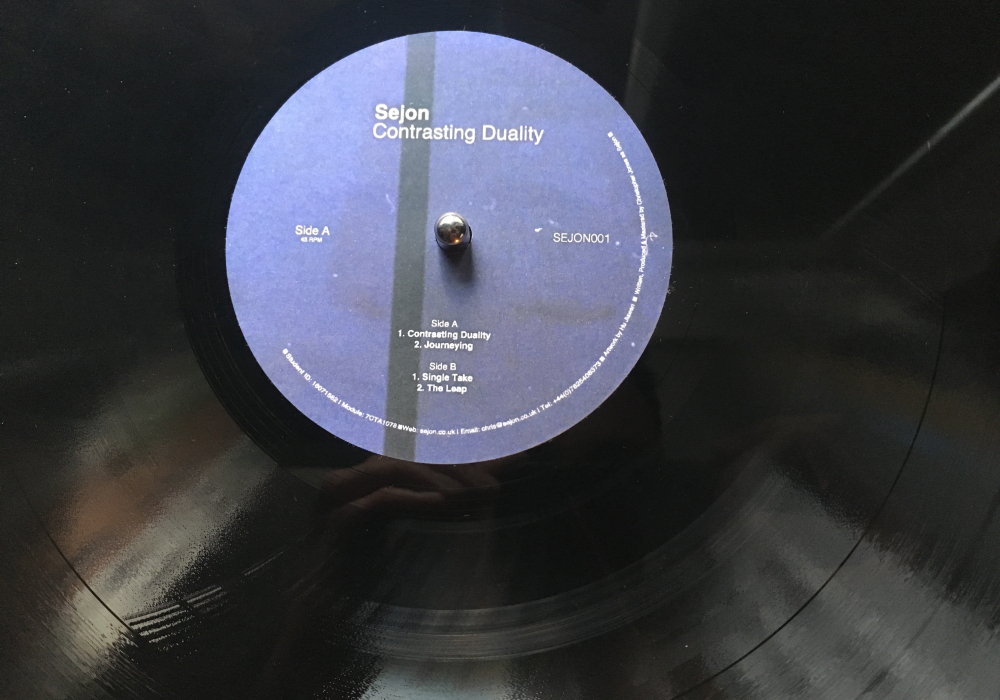
I had envisaged to pickup this project in my Major Study and bring the vision to reality. However, it was seen to be too much work to undertake in three months and perhaps one not suited to the Major Study criteria. Another factor was the lack of music creation I had time to pursue while studying, so I decided to produce an EP for my Major Study instead. Although this was simply a six-track package, with four tracks cut to PVC vinyl, it did have experimental composition methodologies driving it from the ground up. Additionally, I produced a music video for one of the tracks using visual material I had filmed myself, inclusive of cymatic formations in water. Details of this project can be found in my Major Study Journal.

img_9703-copy

MSc Major Project EP | Sejon – Contrasting Duality [SEJON001] (Not actual release)

Having introduced my then friend, now girlfriend, Hu Jiawen to ‘Water Sound Images’, she took it upon herself to incorporate cymatic patterns in her MA Photography Major Study, ‘Water Memory’. Having some knowledge of how to bring this to reality, we combined our skills in photography and audio engineering to capture fluid cymatic motion using a micro-lens and tones generated from a synthesizer.

It was not our intention to capture specific frequencies and their unique geometric shapes, but to observe how the water reacted to random, alternating tones. This is perhaps my intention for a real-time, intuitive visualization objective. It is not like a DJ set would bring specific frequencies, but an unpredictable, fluid combination of multiples which adds to the mystery of the dancefloor experience. There are plenty of examples where cymatic and Faraday formations have been demonstrated using specific frequencies to acquire certain shapes.

I want to explore the unknown, the unexpected and go beyond the boundaries of convention. After all, that is techno. A genre that many try to compartmentalize to suit their perspective – hard, minimal, accessible, Detroit, Berlin, dub, deep, melodic, leftfield. As far as I am concerned, it is what it is. If it’s electronic, instrumental, energetic, percussive and driving…that’s techno. It would be silly to expect a visual cymatic feed from techno, or any other style of electronic music to produce the same geometric shapes as seen when attaining specific frequencies. Nonetheless, the results should be visually stimulating in any given performance environment.

So where to go from here? The intention is to source a decent camera suitable for shooting a live feed in high definition, ideally 4K, and pursue some experiments towards achieving a working prototype installation.

Reflection: Reverse engineered visuals with CymaScope app and emerging new projects… Is Paris good creative tonic?

Since beginning this masters programme, as mentioned in former posts, my energies have been primarily focused researching cymatic frequency, Faraday waves and visualisation capabilities in contemporary discourse. There has been a limited number of music projects I have undertaken, so have I been suffering with writer’s block? My reflection on that led me to think that I needed to stop, step back, breathe and reset. A short trip to Paris with fellow creative friends seems to have been the tonic I needed to reignite my creative workflow, amid scientific research and technological perspective.

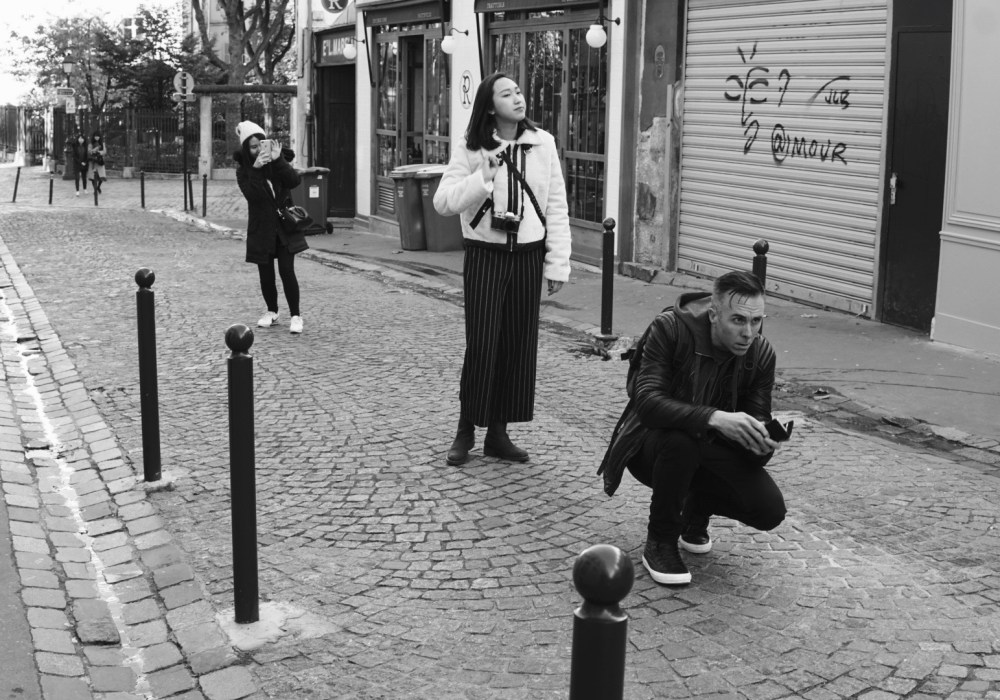
Paris gave me the opportunity to pick up my camera, wander around the streets and interesting sites to replenish my creative eye towards the visual perspective in music I love. So why do I need to do this? Like a soundtrack to a film, I can imagine musical moods complimenting the quant streets, climbing the Eiffel Tower and travelling around the city on the metro. Being with photographer friends was a joy in itself and enabled me to return with some great memories, new footage and the artistic flare I had been missing.

Returning home and opening up my DAW led me down some interesting paths, trying things that I would not typically pursue in my ‘comfort-zone’ workflow. Being a fan of the Parisian techno scene, I took inspiration from reminiscing with some of my favourite producers and DJs before embarking on a new project. Throwing away my typical workflow, I loaded up a synth patch in Reason, connected my MIDI keyboard, switched on the Roland TR-8, hit record and decided to freestyle. The short clip below is an unmixed, raw section where I am still getting my key timings correct. Is this a good recording? With some more work would people dance to it? Naturally I am sceptical, but perhaps.


(Jones, 2017a)

Utilising the experiment I completed before with the Cymascope App with one of my tracks, I subsequently reverse engineered some footage I recorded while travelling up the elevator to the top of the Eiffel Tower. Why do this? As a plan to experiment with intuitive cymatic formations and reverse engineered visuals, I figured it might create a hybridity of effective dynamic suited to the music. From my perspective, these do not blend well together using the technology I have at my disposal, but it gives a good indication of what one can do.


(Jones, 2017b)

As I conclude my final post, what has this process taught me and how has it helped? Reflecting on the last two months and documenting my research has given me a fresh perspective on how I approach my work. As a creative practitioner embarking on a particularly technical route within audio engineering, posting a blog has brought structure and greater balance to my workflow. It has given me greater precedence to record my thoughts, ideas and discoveries as I have progressed over time and enabled me to focus responsibility on specific objectives and subsequent outcomes. Additionally, this process has taught me to explore beyond my creative comfort zone and take inspiration from a broader perspective, to reach a more refined focal point in action. Researching cymatic frequency and Faraday waves has enlightened me significantly and inspired me towards further research and experimentation.

So where do I go from here? My plans are to continue regularly filming new footage in interesting locations to reverse engineer together with cymatic formations overlayed in real-time, for proposed future visual work. I will also continue producing techno and other sub-styles of electronic music with the intention of presenting music and cymatic visuals together in live performance events. Perhaps for my final major project. However, this will all depend on having access to a CymaScope and the necessary equipment to combine the two visual feeds. Finally, I intend to maintain a regular blog to document my future creative progress and reflect on the way I work, taking responsibility for my ideas, actions and their relevance in my discipline.

References:
Jones, C. (2017a) Sejon – J’adore Paris (1st Bounce Unmixed WIP) [online] Available at: https://soundcloud.com/chris-jones/jadore-paris-1st-bounce-unmixed-wip/s-yiiqy [Accessed: 02 December 2017]
Jones, C. (2017b) Sejon – Peace Out (CymaScope Interpretation + Visuals) [online] Available at: https://youtu.be/7_iGcEtm8YM [Accessed: 04 December 2017]

#Reflection

Reflection: Compression, equalisation and TR-808? Studio software and hardware comparisons…

Having been tasked with a new assignment as part of the audio engineering module, we have to compare and analyse the sonic parameters of three studio hardware and software technologies. The requirement being one compressor and equalizer (EQ), with the third open to our own choice, including synthesisers and drum machines. As I proverbially gulp, it dawns on me of the increasing difficulty and complexity of this masters programme. Naturally I reflect and question my technical capabilities, experience and knowledge before reassuring myself  that I will be fine, perhaps. Do I have the expertise to do this? Where do I begin?

As primarily a DJ and electronic music producer, my professional studio experience has not yet evolved to the level of other musicians, primarily bands and singers. Therefore the necessity of some studio technologies has been primarily redundant up until now. Why is this the case? My workflow for the preceding number of years has always been using Propellerhead’s Reason as my primary digital audio workstation (DAW), with all its software instruments, effects and utilities. Other DAWs, such as Logic and Ableton Live have also had the ability to use virtual studio technologies (VST), whereas Reason only included this in its recent version 9.5 update in 2017. Taking this into consideration, my workflow has rarely utilised VSTs, except whenever dipping into Logic or Ableton for certain personal projects in the past. Does my lack of experience with VSTs let me down for this? Will I struggle to make a good comparison with the studio technologies I am familiar with?

There are a number of VSTs based on actual studio hardware, replicated into affordable software for computer based composition. However there are few, if any of these in Reason except one primary component being the main mixer, which is based on the Solid State Logic (SSL) 9000+ analog mixing desk. So why is this relevant? Due to my limited experience with VSTs and studio hardware, and the fact that there is an SSL 900+ mixing desk in Studio 1, I figured it would be wise to compare this to the mixer in Reason. Therefore it is proposed that I will compare the Master Bus Compressor and channel EQ with the equivalent in Reason.

awsmain8

Solid State Logic Mixing Desk (Solid State Logic Japan, n.d.)

Reason

Reason Mixer (Ask Audio, n.d.)

I still have to ask myself, with my self-contained DAW experience, can I do this successfully? I would like to think I can, so metaphorically I will just ride the wave until I can stand up without wipe out. My first time inside Studio 1 using the SSL desk was a great but frustrating experience. For this exercise, I took unmixed stems from two of my ongoing techno tracks, named ‘Interstellar’ and ‘Grooveyard’ and imported them to Logic before proceeding to mixdown through the SSL desk.


(Jones, 2017a)


(Jones, 2017b)

To summarise, this process was the most pleasurable mixdown I have ever done due to the clarity of sound and acoustic treatment of the control room. However, my technical knowledge failed me as I did not know how to send and record the mixed audio signals back into Logic from the SSL desk. So unfortunately, I lost about an hour’s worth of excellent work. So how do I overcome this happening again? I have since sought advice from a studio technician and acquired the manual for the SSL to help me gain the skill I need for future sessions.

The third comparison in this assignment is proposed to be between the Roland TR-808 drum machine and either of recent additions, in the TR-08 or TR-8. Perhaps I will complete this comparison first as the patterns I record could form part of the sounds I run through the SSL and Reason mixer to analyse the Master Bus Compressor and EQ. Is this a good approach to this assignment? This is perhaps not the most exciting proposal for fellow, aspiring audio engineers who love their VSTs, but it’s a good start that will open up greater experience and other avenues. Onwards and upwards.

References:
Jones, C. (2017a) Sejon – Grooveyard (Pre-Mix Loop) [Online] Available at: https://soundcloud.com/chris-jones/grooveyard-pre-mix-loop/s-86sPo [Accessed: 01 December 2017].
Jones, C. (2017b) Sejon – Interstellar (Pre-Mix Loop) [Online] Available at: https://soundcloud.com/chris-jones/interstellar-pre-mix-loop/s-0hNne [Accessed: 01 December 2017].
Solid State Logic Japan (n.d.) Gallery, AWS 900+ [Online] Available at: http://www.solid-state-logic.co.jp/resources/gallery/aws900.html [Accessed: 01 December 2017].
Ask Audio (n.d.) Reason 6: The New Mixing Console Review [Online]. Available at: https://ask.audio/articles/reason-6-the-new-mixing-console [Accessed: 01 December 2017].
Roland US. (2014) TR-808 Drum Machine Flashback – Roland U.S. Blog [Online]. Available at: http://www.rolandus.com/blog/2014/02/13/tr-808/ [Accessed: 01 December 2017].
Roland Corporation (n.d.) Roland – TR-8 | Rhythm Performer [Online]. Available at: https://www.roland.com/global/products/tr-8/ [Accessed 01 December 2017].

#Reflection